
Multifest Still a Beacon of the Need for the Black Press
A look at the history of Multifest and the role Black newspaper The West Virginia Beacon Digest played in its inception
This story was first published in 2021 and updated in 2024.
Multifest is now celebrating its 34th year.
Multifest’s success story points to the power of the Black press. At that time, no media organization in West Virginia except Beacon Digest felt the need to have a conversation about the Regatta. The paper catalyzed change.
Some problems can only be solved through honest conversations within the community; Stephen Starks already knew this when he took over his father’s business nearly 40 years ago.
Benjamin Starks founded the Beacon Journal in Charleston in 1957, later forming The West Virginia Beacon Digest. After Benjamin fell ill in 1983, Stephen and his wife Deborah continued operations for the storied Black newspaper. By 2005, the Beacon Digest was a weekly publication with a circulation of 30,000 subscribers throughout West Virginia and across the nation.
We’ll bring the best from BBG right to your inbox. You can easily unsubscribe at any time.
Sign Up for our Newsletters!
The younger Starks spent his early years in the shadows of the Black press and many hours candidly discussing the issues of the time with his father. This prepared him for the long career in journalism he’d soon pursue.
“I grew up around it, and he always made sure to discuss all the issues that we’re facing — especially our community,” Starks said. “I noticed that it was very important that my father wanted to focus on the African American community in a way that an African American newspaper can do.”
That focus led to comprehensive coverage of leadership within the Black community and the fight for fair voting rights. Benjamin Starks took his political endorsements very seriously, knowing all that was on the line for the Black community.
Progress was often overlooked by the white press. Starks said reporters were especially absent when positive developments occurred in the community.
Starks continued his father’s coverage of Black leadership, extending that reporting to government and the private sector, where he championed the idea that Black people should be fairly represented within leadership roles in the workplace. The Beacon Digest extensively covered the relationships between key figures in the Black community, growing job opportunities, and “the opportunities that did exist and the ones that didn’t” for people of color.
No issue of discrimination was small potatoes to the Beacon Digest, where often the white press struggled to address the problem at hand. One of these issues became prevalent about 30 years ago.
The Sternwheel Regatta, Charleston’s grand late summer event, reached its peak during the late 1980s and early 1990s. The riverfront event had been around since 1979. By 1990, many in the Black community were turned off by the Regatta and the crowd it attracted, so Starks began pushing for more diversity within the event.
At the time, David Fryson, Starks’ friend and legal hand, said Starks tried to get the Regatta’s organizers on board with attracting diverse acts and events.
“What they basically said,” Fryson said, “was, ‘No, this is our event, and if you don’t like it, you need to start your own.’”
That’s what they went and did.
Starks penned a then-controversial, now-lauded editorial in the Beacon Digest saying he would not attend the festival that year due to its exclusion of diversity. The article grew into a boycott of the Regatta by the Black community. But for some like Fryson, the Regatta’s crowd grew so ornery over the years he already avoided his office downtown when the sternwheelers came to town.
“The Regatta turned almost into this 10-day kind of drunken brawl,” Fryson said. “It brought out all the worst elements.”
In their early 30s at the time, Fryson said it was their youthful inexperience that birthed The Multicultural Festival of West Virginia, known today as Multifest.
“We were so young we didn’t realize how crazy it was what we were trying to do,” Fryson said.
At the time of this original BBG publication, the duo stood by their actions and the boycott, saying the Black community took a significant step in 1990 by successfully launching its own event. Like many injustices Black newspapers fought head-on, the solution to the problem arose only when the Black press first drew attention to it.
“It was a protest against the fact that it was not diverse — the fact that it was disrespectful to our community,” Fryson said.
Fryson credited Starks for “pretty much single-handedly” launching Multifest.
Multifest became a national-award-winning event, attracting performing acts like Kool and the Gang, Isaac Hayes, The Delfonics, YoungBloodZ, and The Manhattans. Starks garnered state, local, and private business funding to balloon the festival into the three-day event that remains today.
“There were some absolutely phenomenal Multifests,” Fryson said, drawing crowds of more than 20,000 people at its peak.
But as custom for Black-led initiatives in West Virginia, the money never flowed in with ease.
With the festival being held on the State Capitol grounds, Starks ran into problems with state agency heads and politicians — and the political party never mattered, Fryson said. Acting as Starks’ legal defense for many years, Fryson said “the entrenched powers at the Capitol” threatened funding or vowed to yank the event away from Capitol grounds nearly yearly. Fryson said Multifest weathered every storm to survive, unlike the Regatta, where attendance began to tank year-by-year and eventually died as Multifest exploded in popularity.
Multifest’s success story points to the power of the Black press. At that time, no media organization in West Virginia except the Beacon Digest felt the need to have that conversation about the Regatta. The paper catalyzed change.
“Sometimes people believe that the Black press is for Black people, but it’s not. The Black press is for everyone,” Fryson said. “To have a vehicle like this, where you can have these in-depth conversations throughout the year — it’s invaluable.”
The strength of Black newspapers came from its reporters going off the beaten path to find solutions to the complex, multi-layered issues plaguing the community, and then telling those stories with a diverse perspective, Fryson said. If left up to the white press, the issues of diversity in leadership, all the way to gun violence, would not be known until they are unavoidable for the white community.
“[The Black press] informs the whole community about issues so often overlooked,” Fryson said. “And the thing about overlooking an issue is that you overlook it until it becomes an emergency.”
Deanna McKinney, former city council member who represented the city’s West Side, said Charleston’s press corps could learn plenty from the teachings of the Black press. In November 2021 she held a community event featuring mental health providers, employment opportunities, business start-up help, spaces for local volunteer groups as well as a voter registration drive, McKinney said she organized it to show community members that there are still avenues for creating positive change. But when the three local TV stations, newspaper and radio station aren’t there to spread that message further, and then dive into those issues, what role does local media actually play in her community, McKinney asked.
“They only come out when there’s something bad. They don’t come out here for this,” she said. “Do you see any press right now?”
McKinney held the event on the corner of Central and Glenwood Avenues, where in April of 2021 the community lost 17-year-old K.J. Taylor in a drive-by shooting. The irony was not lost on her.
“We’re doing something good in the community and ain’t no people here, but let there be some gunshots,” she said. “They’re looking for a story for somebody to be dead, and that disgusts me.”
But changing a community must start within it, McKinney said. So, she’s hopeful the reemergence of a Black press in West Virginia can document and complement the community’s push for significant change.
“It’s really up to us,” she said.
Multifest grew out of protest, but it also became the success story it is today because diversity was its focus. Starks said he wanted to showcase what West Virginians of all cultural backgrounds had to offer. It turned out a lot of people wanted that too — but it took the moral courage of the Black press to make it happen.
Starks said he wanted to see the white press focus more on the positive aspects of the Black community. That can be in the form of the community’s contribution to the local economy, its effect on local, state and federal politics — or the positive change community members are seeking to create but don’t have the forum to do so. Overall, white media should examine fairness in the press while evaluating themselves, he said.
And for Black newspapers continuing the fight into the 21st century, Starks said he hoped to see them keep championing the path forward.
“I certainly think that the Black press should focus on the positive aspects of where our community can go, and try to educate young people more on the opportunities — and the ceilings — that we can have,” he said.

Multifest 2024 is Aug. 1-4 at Haddad Riverfront Park in Charleston, W.Va. More info and the entertainment lineup.
Black by God and The Black Voter Impact Initiative will be hosting a booth at Multifest to get opinions and info from you on what should go into shaping Black Policy Day at the Legislature.
If you appreciate BBG's work, please support us with a contribution of whatever you can afford.
Support our stories
Related Articles
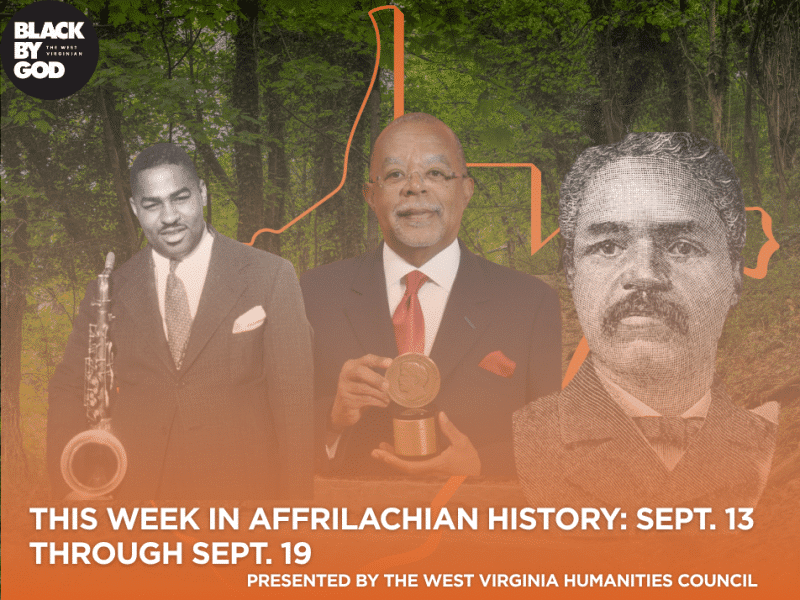
This week in Affrilachian history: Sept. 13 through Sept. 19
Discover key mid-September milestones in Affrilachian history: pioneer lawyer J. R. Clifford, jazz legend Chu Berry, and scholar Henry Louis Gates Jr.
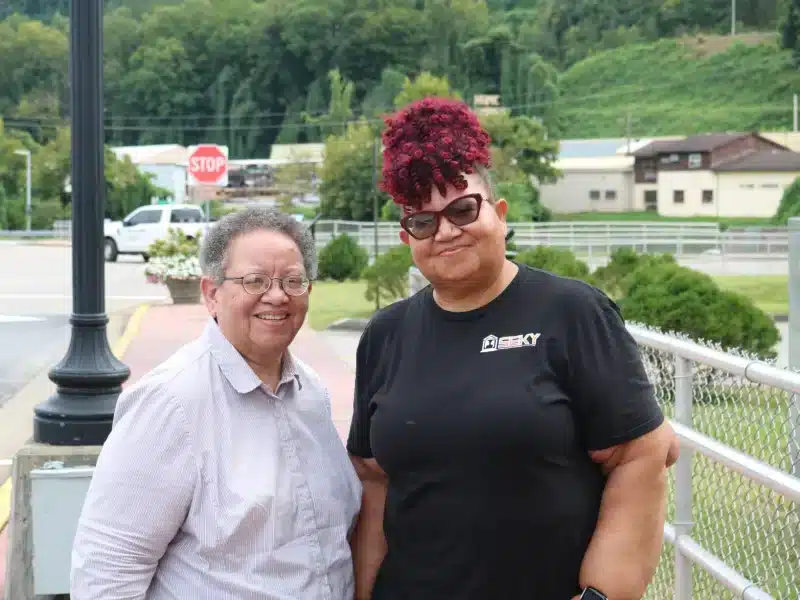
Eastern KY artists celebrate America’s 250, Black history with ‘pursuit of liberty’ quilt
The Southeast Kentucky African American Museum unveils its ‘Pursuit of Liberty’ community quilt project in Hazard, honoring Black history and Appalachian roots.
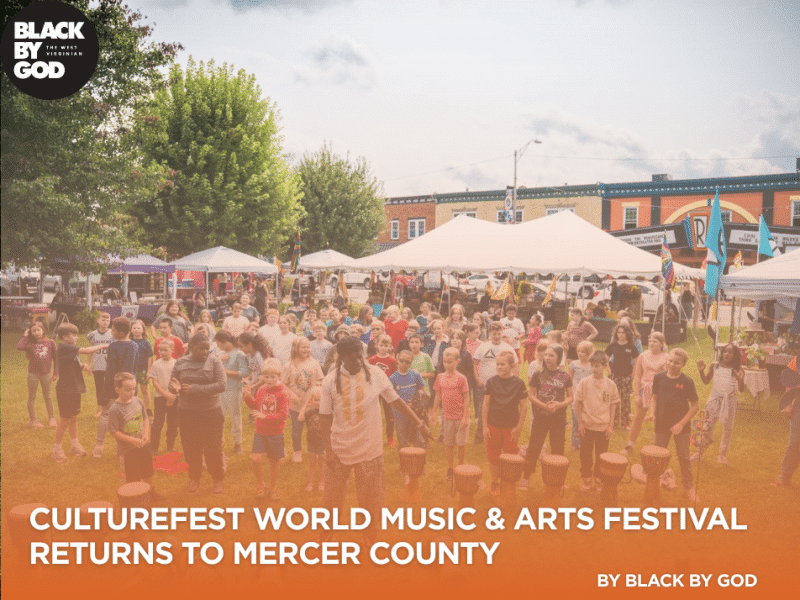
Culturefest World Music & Arts Festival returns to Mercer County
Culturefest returns to Princeton, WV Sept. 8–13 featuring global artists, school workshops, and 4 days of free live music, art, and food in the Grassroots District.