Roane County Commission joins local governments opposing Valley North transmission line
The 260-mile project, which has faced widespread public scrutiny, would cut through 15 West Virginia counties.
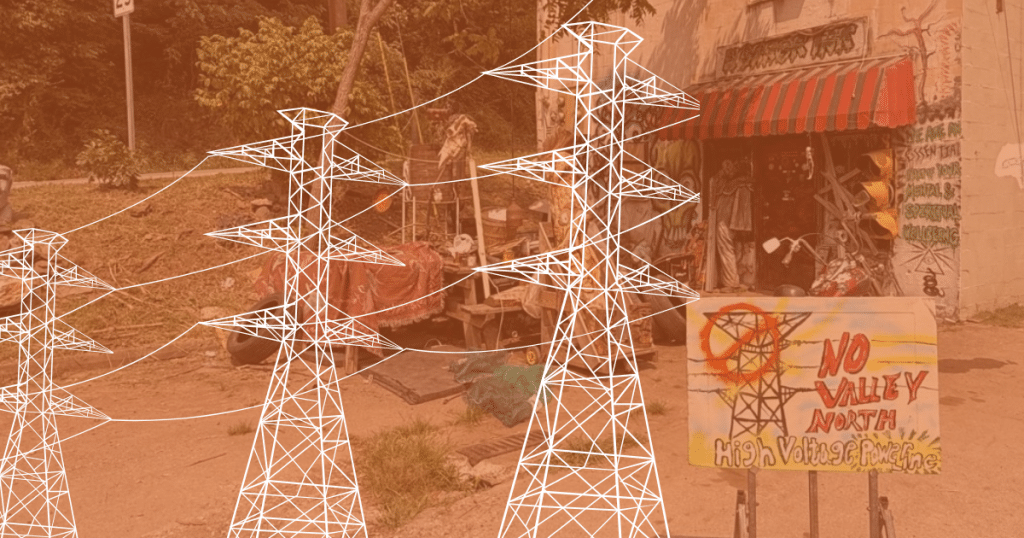
Graphic by Ellie Heffernan.
Business owners throughout the small town of Spencer, W.Va., guarded their parking lots as hundreds poured into the community for an open house held on Tuesday, July 28, by Valley Link LLC. Everyone came to learn more about the Valley North Project, a proposed 260-mile high-voltage transmission line that would cut through 15 West Virginia counties.
Developers say the project will strengthen the regional electric grid and create more economic opportunities. Nevertheless, Valley North has generated mass opposition throughout the state, due to concerns over property rights, higher electric bills and West Virginia potentially being used to benefit out-of-state corporations.
“I was told it was the biggest turnout among all open houses,” Roane County Commissioner Marlin Shamblin stated during a special session meeting held three days after the open house.
We’ll bring the best from BBG right to your inbox. You can easily unsubscribe at any time.
Sign Up for our Newsletters!
The county commission called that special meeting in direct response to that high turnout — and ultimately approved a resolution opposing the Valley North Project. Several other local governments have also formally opposed the project, including county commissions in Barbour, Preston, Upshur, Calhoun, Lewis, Monongalia, Mineral, Hampshire and Harrison.
Multiple residents who attended the meeting in Roane County spoke out against what they described as Valley Link’s inability to answer questions during the open house.
Roger Adams, a retired U.S. government acquisition consultant expressed concern about the project crossing his property. With working timber operations on more than 500 acres, Adams said transmission lines would hurt his business and asked why West Virginia was targeted for the transmission lines in the first place.
Commissioners explained that neighboring states have regulations in place that prevent such infrastructure from being built.
“We need to have that rule here,” Adams responded. “We’re not gonna build or allow any transmission lines to export electric out of our state. Those don’t benefit us at all. We can’t get electric off those lines. It has no benefit to us; it just has harm.”
Sarah Vosberg, a Spencer resident and environmental activist, was infuriated by misinformation she said she received while attending open houses in both Calhoun and Roane Counties.
“We were going around to different sections where they were answering questions, and in that, they were literally sending us around in circles, like chickens, not getting any real answers,” Vosberg said. “They were also talking about how many Hertz the lines put out, and they would not admit that those change depending on the weather and moisture.”
In 2023, Vosberg registered her property as a Certified Wildlife Habitat through a National Wildlife Federation program. She told commissioners Valley Link representatives assured her that her property was federally protected by easements due to this certification. However, she later found this to be untrue.
Other attendees reported receiving contradicting information about radiation from the transmission towers and its potential health effects.
In an article published by WV News, Valley Link spokesperson Lauren Siburkis was quoted stating, “EMF is present in our everyday life and is produced whenever electricity is used, including by household appliances. Decades of research conducted by organizations such as the World Health Organization and National Cancer Institute have not established a cause-and-effect relationship between power-line EMF exposure and adverse health effects.”
Attendees of Friday’s Roane County Commission meeting said claims like these downplay reputable research saying the question warrants further investigation, despite no conclusive evidence of adverse health effects below established exposure limits. .
Commissioners paused public input to ask if anyone in attendance favored Valley Link’s plans to use West Virginia for its transmission lines. The response was deafening laughter.
They voted unanimously to write a letter to the West Virginia Public Service Commission, opposing the Valley North Project.
The company did not respond to an emailed request for comment.
This story has been updated to add more county commissions that have formally opposed the Valley North project.
This story was reported with support from The Ohio River Valley Participatory Fund.
If you appreciate BBG's work, please support us with a contribution of whatever you can afford.
Support our stories
Related Articles
Charleston City Council proclaims September ‘Hunger Action Month,’ approves $166k for City Fire Department
Charleston City Council proclaims September Hunger Action Month, appoints Jessica Hudson to Ward 18, and approves $166k for Fire Department equipment.
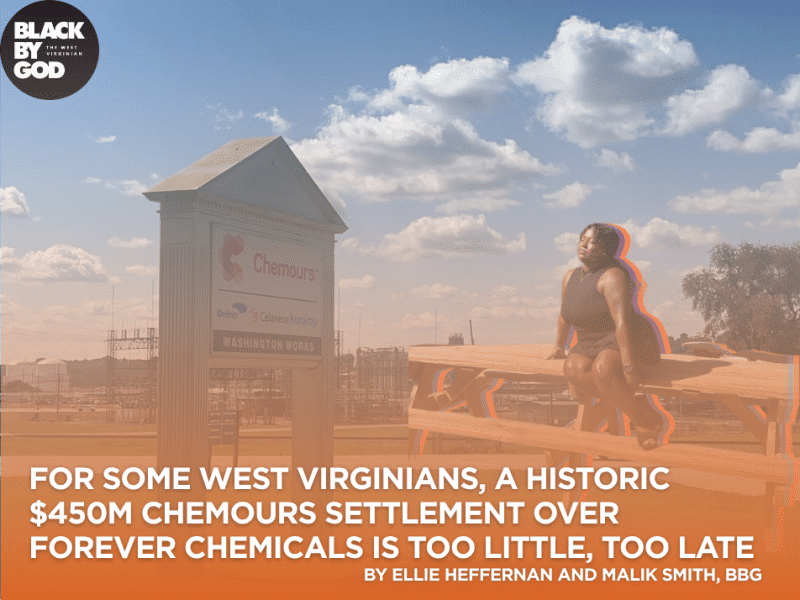
For some West Virginians, a historic $450M Chemours settlement over forever chemicals is too little, too late
Parkersburg residents react to Chemours’ historic $450M PFAS settlement as federal drinking water protections face potential rollbacks and long-term health harms linger.