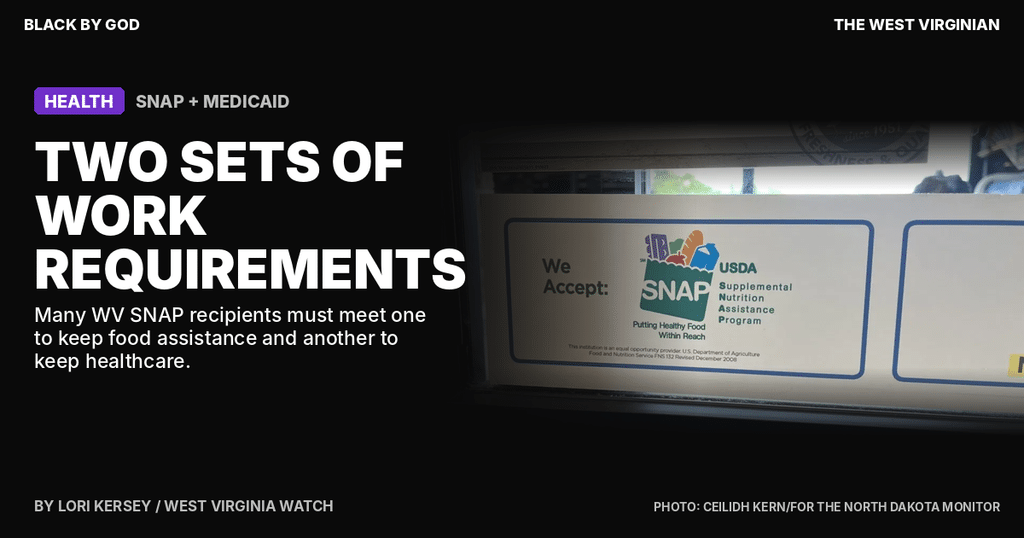
Many WV SNAP recipients will have two sets of work requirements to keep food assistance, healthcare
Many low-income state residents will soon be required to meet two sets of work requirements — one to keep healthcare and another for food assistance — according to an analysis from the West Virginia Center on Budget and Policy.
By Lori Kersey, West Virginia Watch
This article was originally published by West Virginia Watch, an independent, nonpartisan news service based in Charleston. You can make a donation here.
Many low-income state residents will soon be required to meet two sets of work requirements — one to keep healthcare and another for food assistance — according to an analysis from the West Virginia Center on Budget and Policy.
About 84% of state households that rely on the Supplemental Nutrition Assistance Program include a person who’s on Medicaid, according to the Center’s analysis of American Community Survey data from 2020 through 2024.
In the years 2020 through 2024, an average of 127,400 West Virginia households received SNAP. Of those, about 107,300 households — or 84% — included someone with Medicaid coverage. The data does not indicate how many of the Medicaid recipients are part of the expanded program.
About 49,000 West Virginia households with children received both Medicaid and SNAP.
As of Jan. 1, 2027, both programs will have work requirements. Under the One Big Beautiful Bill Act, people who are on expanded Medicaid through the Affordable Care Act will be required to work or volunteer for 80 hours per month in order to keep their benefits.
SNAP recipients are also required to do at least 80 hours per month of work, training or volunteering in order to keep receiving benefits. The One Big Beautiful Bill Act extended the upper age limit for the work requirements from 54 to 64. It also removed exceptions for being homeless, a veteran or a former foster care youth under age 25.
Sean O’Leary, senior policy analyst at the West Virginia Center on Budget and Policy, said if the two work requirement processes aren’t streamlined, it could mean that more eligible people lose their healthcare and food assistance.
“(The concern is) basically since there’s so many households participating in both, they’re going to be responsible for managing two work requirement reporting eligibility renewals every month,” O’Leary said. “The documents that are requested, the deadlines — if that’s not streamlined, then you’ll likely see more eligible people lose their assistance, both of SNAP and Medicaid.”
The analysis says the reporting requirements are likely to result in eligible people losing their healthcare and food benefits due to missing a notice or encountering a technological problem.
According to the West Virginia Department of Human Services, anyone meeting the SNAP work requirements will automatically satisfy the Medicaid work requirements, but those meeting the Medicaid requirements do not automatically meet the SNAP requirements.
“Our focus is on helping more West Virginians overcome barriers to employment and return to the workforce,” Angel Hightower, communications specialist for the state Department of Human Services, wrote in an email to West Virginia Watch.
“We want people who are able to work to have the opportunity to do so, while making sure those who qualify for assistance continue to receive the support they need,” she said. “We recognize that many families are facing difficult circumstances, and we’re committed to making this transition as smooth as possible while helping people find a path toward greater financial stability and independence.”
So far under the One Big Beautiful Bill Act, more than 22,000 West Virginia residents have lost their food stamps, according to the Center on Budget and Policy.
An analysis by the state health department earlier this year estimated that about 33,000 West Virginia residents would be affected by the Medicaid work requirements.
If you appreciate BBG's work, please support us with a contribution of whatever you can afford.
Support our stories
Related Articles
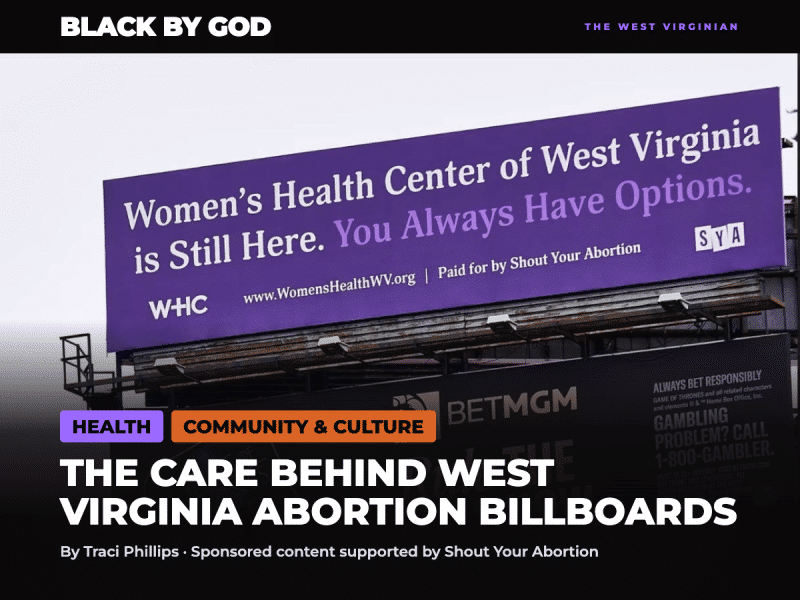
The Care Behind West Virginia Abortion Billboards
A campaign by Shout Your Abortion & Women’s Health Center of West Virginia highlights available healthcare services for Black women and underserved groups.
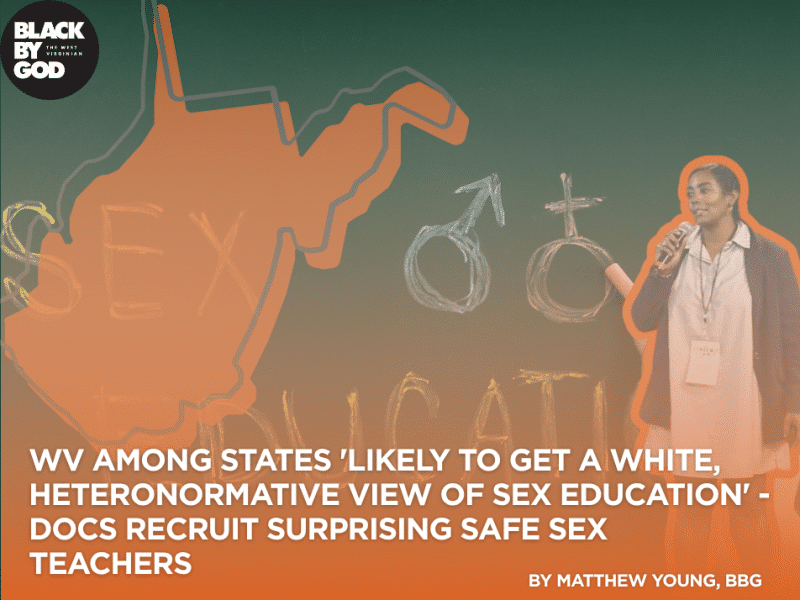
WV among states ‘likely to get a white, heteronormative view of sex education’ – docs recruit surprising safe sex teachers
UKy researchers Dr. Rebecca Bosetti & Dr. Laneshia Conner unpack sex education policy gaps and lifespan health at CEG’s Syndemic Summit.
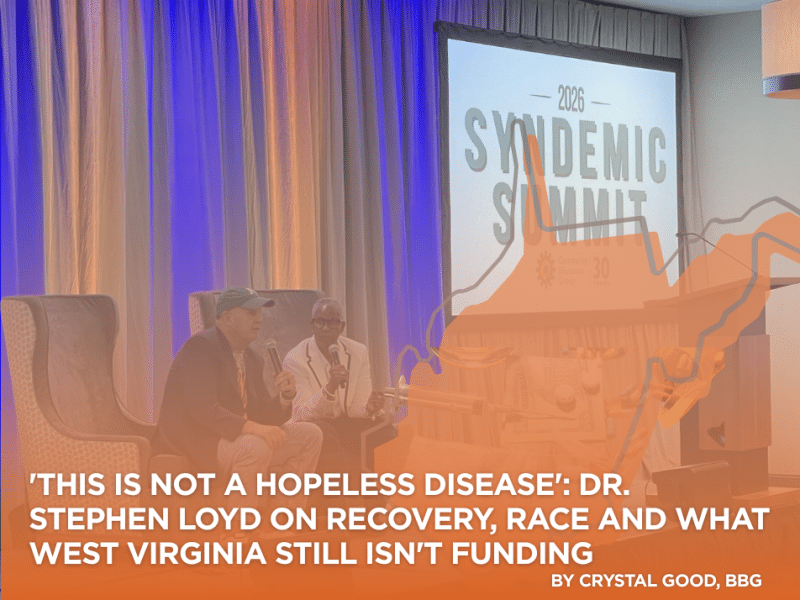
‘This Is Not a Hopeless Disease’: Dr. Stephen Loyd on recovery, race and what West Virginia still isn’t funding
During the third annual Community Education Group (CEG) Syndemic Summit this week, the doctor whose life inspired Michael Keaton’s character in “Dopesick” sat down with CEG Founder, Dr. A. Toni Young, for a conversation that spanned from Hollywood, to Mingo County, to the White House — and back to the question nobody in the room could answer…