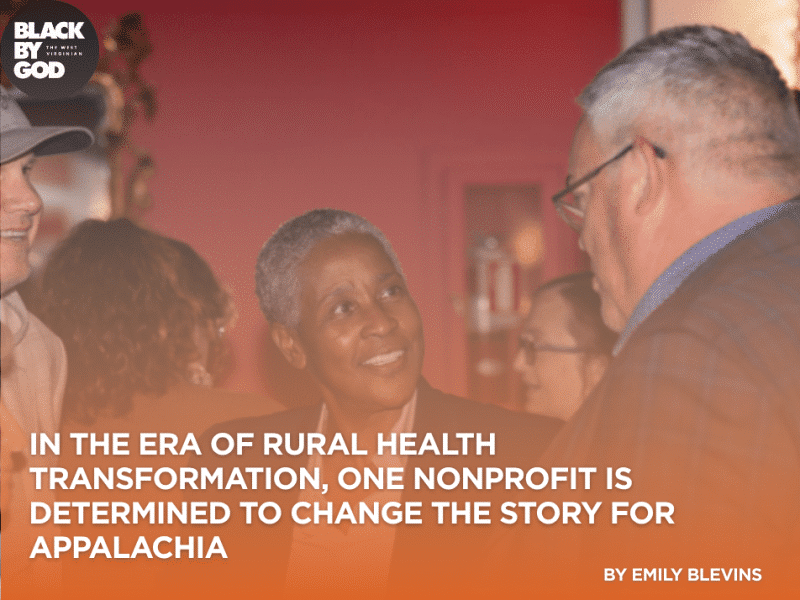
WV among states ‘likely to get a white, heteronormative view of sex education’ – docs recruit surprising safe sex teachers
UKy researchers Dr. Rebecca Bosetti & Dr. Laneshia Conner unpack sex education policy gaps and lifespan health at CEG’s Syndemic Summit.
By Matthew Young, BBG
HUNTINGTON, W.Va. – “Only 18 states require that the sex education programming they provide be medically accurate – just 18 states. If you’re not in one of those states, they can teach you things that are false. It’s A-OK, there’s no oversight into it.”
That’s what Dr. Rebecca Bosetti, assistant professor of social work at the University of Kentucky, told attendees of the Community Education Group’s (CEG) Syndemic Summit Thursday, as part of a joint presentation on sexual health and safety. Bosetti’s work with the university focuses on the potential for adult sex shops to serve as alternative spaces for sexual health education.
Kentucky, Bosetti noted, is not among the 18 states that require medical accuracy in their sexual education. For point of reference, neither is West Virginia.
“From day one, I know that the students I’m teaching [ … ] are not necessarily getting medically accurate sex information,” Bosetti said. “Nine states require that the program provide instruction that is not biased against any race, sex, or ethnicity. If you’re not in one of those states, you are likely to get a white, heteronormative view of sex education, which we know is not inclusive, [and] not representative of real world sexual interactions.”
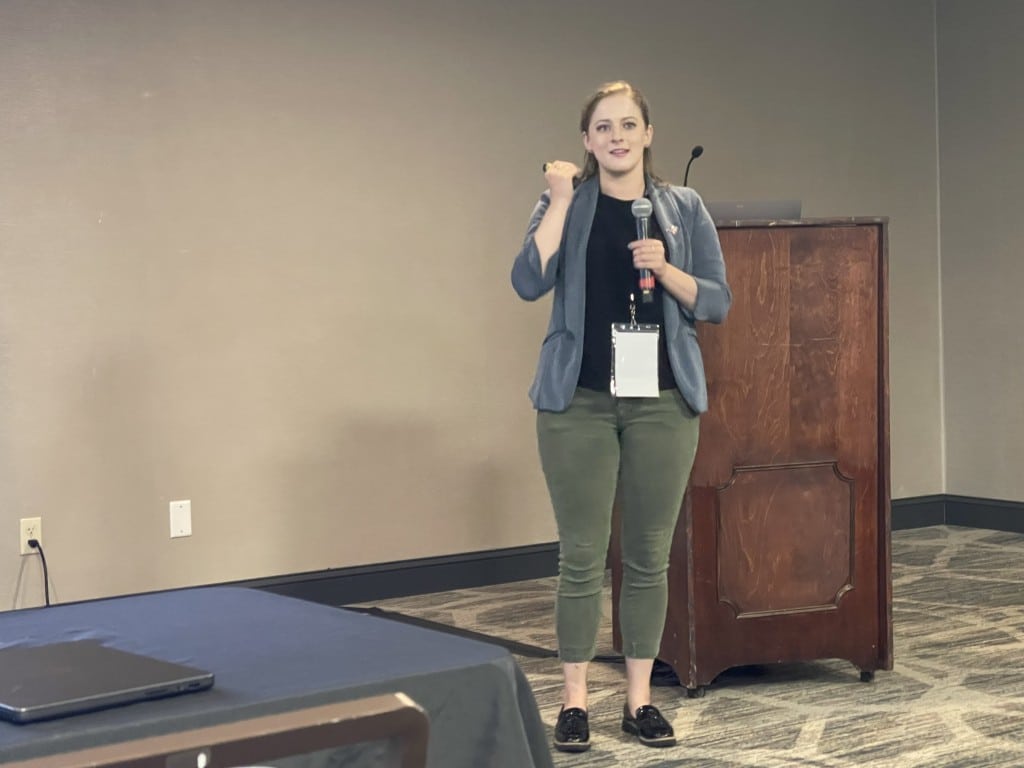
According to Bosetti, 20 states and Washington D.C. require contraception education to be a part of their public school system’s sexual education curriculum. Bosetti, however, believes that number is inadequate.
“Why do we have a teen pregnancy crises?” Bosetti rhetorically asked. “We don’t require teaching about contraception – teaching these different options that are widely available.”
Washington D.C. as well as 39 states, Bosetti continued, require the teaching of abstinence as part of their sexual education curriculum.
“So in our states, largely, we’re being pushed to preach abstinence-only, or abstinence as the primary way to prevent negative outcomes of sex, and not supplementing that with prophylactic-strategies,” Bosetti noted. “28 states require that abstinence be stressed (in sexual education curriculum), and 19 require instruction on the importance of engaging in sex only within marriage.”
“When we’re talking about a community-based, or a universal prevention approach, we know this is not working,” Bosetti added. “We know that this is contributing to teen pregnancy, to rising disease transmission, and, largely, to the continuation and perpetuation of sexual violence.”
Throughout the course of her research, Bosetti said she visited numerous adult sex toy shops across Kentucky, to conduct interviews with employees.
“The logic is that these stores have a lot of potential for getting resources into the hands of the public,” Bosetti explained. “There are commonalities in the sexual health questions that the employees are asked by their customers. These are people that are already coming in looking for some kind of information, and who can take that information back to their families, and back to their communities.”
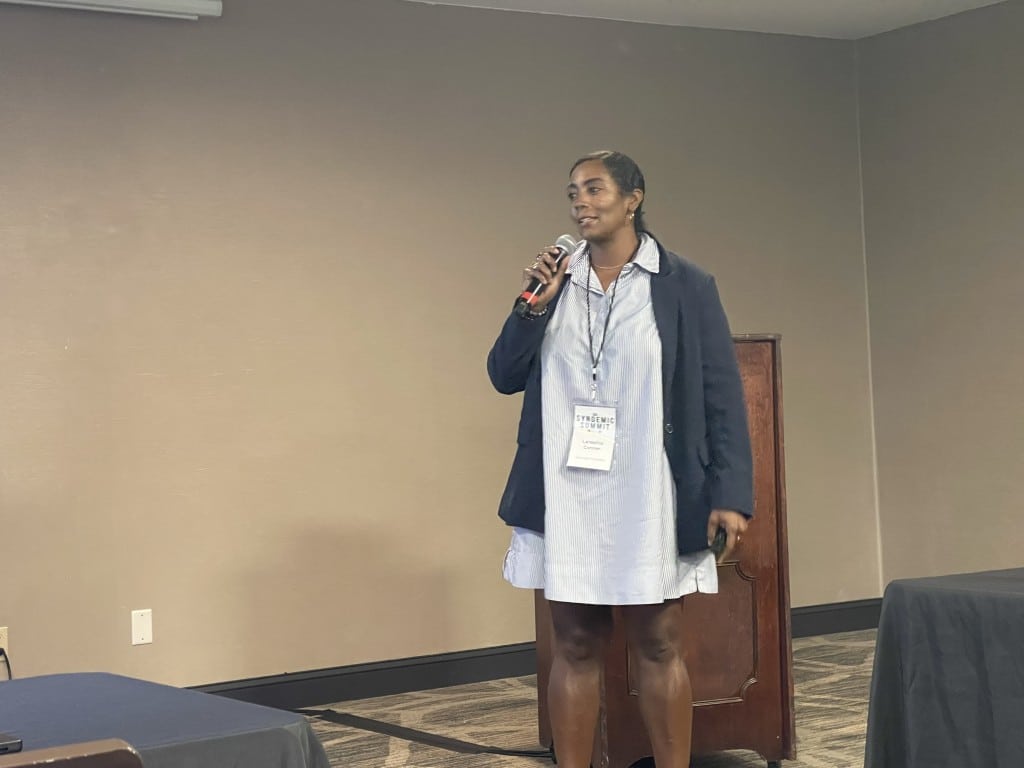
Joining Bosetti for the presentation was Dr. Laneshia Conner, associate professor of social work at the University of Kentucky, who said, “I’m kind of on the opposite end of what Rebecca (Bosetti) just talked about, because I work with older adults. It’s the same thing, it’s just across the lifecourse.”
“I’m very interested in developing HIV-strategies for older adults,” Conner continued. “Neutral status is my thing. I don’t need to know your status, I just wanna know that you have the information that you need, in the way that you need it.”
Glenn Sterner, associate professor of criminal justice, and Aubrey Jones, associate professor of social work – both at the University of Kentucky – partnered in the study, and its presentation.
As stated on the university’s website, “The College of Social Work at the University of Kentucky has a long history of research partnerships with stakeholders to address key issues in communities in Kentucky, across Appalachia, and beyond.”
To learn more about the work of Conner and Bosetti, or for information about the other research being conducted at the College of Social Work at the University of Kentucky, visit socialwork.uky.edu/about-us/.
If you appreciate BBG's work, please support us with a contribution of whatever you can afford.
Support our stories
Related Articles
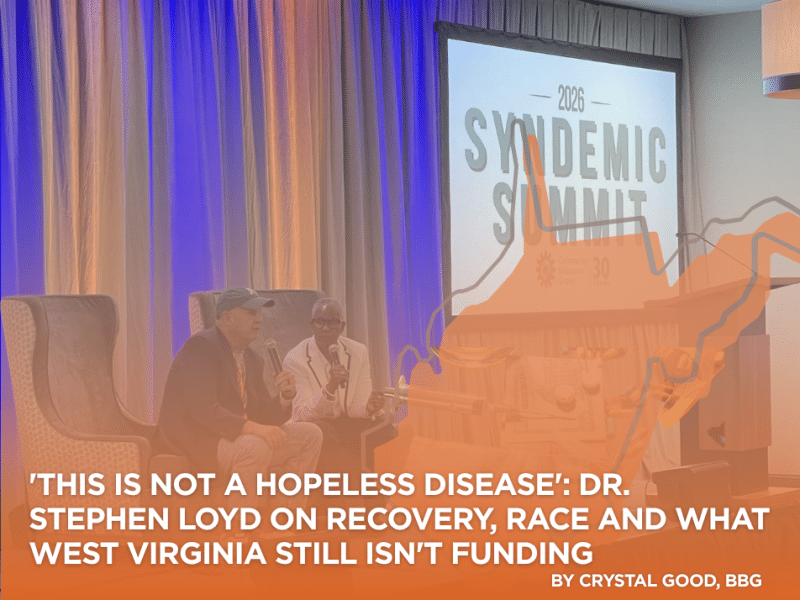
‘This Is Not a Hopeless Disease’: Dr. Stephen Loyd on recovery, race and what West Virginia still isn’t funding
During the third annual Community Education Group (CEG) Syndemic Summit this week, the doctor whose life inspired Michael Keaton’s character in “Dopesick” sat down with CEG Founder, Dr. A. Toni Young, for a conversation that spanned from Hollywood, to Mingo County, to the White House — and back to the question nobody in the room could answer…

‘I wasn’t homeless because I was using, I was using because I was homeless’ – former unhoused talk long path to rejoining society
Truth Pharm presents participant-informed research on homelessness, digital barriers, and care systems at CEG’s 3rd Annual Syndemic Summit in Huntington, WV.