Moundsville’s Small Steps Christian Academy opens in response to what one parent calls ‘deficiencies in West Virginia’s public school system’
Tyler West investigates West Virginia microschools, Hope Scholarship voucher funding, public school closures, and the debate over oversight under SB 268.
By Tyler West
Small Steps Christian Academy in Moundsville recently welcomed its first class of students. The institution was opened by Christine Sobutka in response to what she views as deficiencies in West Virginia’s public school system. She felt her son’s education was marked by teachers telling him what he wouldn’t be able to do, and her goal is to help children excel instead of doubting their abilities.
“My main form of teaching is play,” Sobutka said. “We have a morning meeting every day, and then we’re going to go on a hike for an hour, as long as weather permits.”
Christine said she feels that public schools have gone “too far left.” She also claimed there were litter boxes in school restrooms and that schools were teaching things that were “anti-Christian, 100%.” Sobutka did not specify which school(s) this was happening in.
Dr. Shelby Haines, Superintendent of Marshall County Schools, refuted Sobutka’s claim that there were litter boxes in Marshall County Schools. “I am unsure which public school is being referenced, but I feel quite confident it was not a Marshall County School.”
Dr. Haines spoke further to the quality of education provided in Marshall County’s public schools “Students get a top-notch education through the public school system. We have certified teachers and an abundance of opportunities ranging from free transportation, breakfast and lunch to certified teachers in a multitude of areas. We have state of the art technology and learning supports.”
Small Steps is currently a K-2 School, and Sobutka is its only teacher, although she doesn’t have a teaching degree. She does have twenty years of childcare experience, an associate’s degree in child development, two years towards a degree in biology, and ambitions to pursue a master’s degree in special education.
Instead of giving children traditional grades, she plans to meet with parents monthly and discuss their goals and progress for their child. Sobutka also plans on keeping her classroom screen-free.
“I really don’t know, because I’m more about achievements and celebrating that than I am about what you get as a grade … What about the kid that tried really hard and got all C’s?,” Sobutka asked. “I mean, he tried just as hard as that kid that got all the A’s. You know what I mean? I don’t want to put labels and names and all that stuff on everything if I don’t have to.”
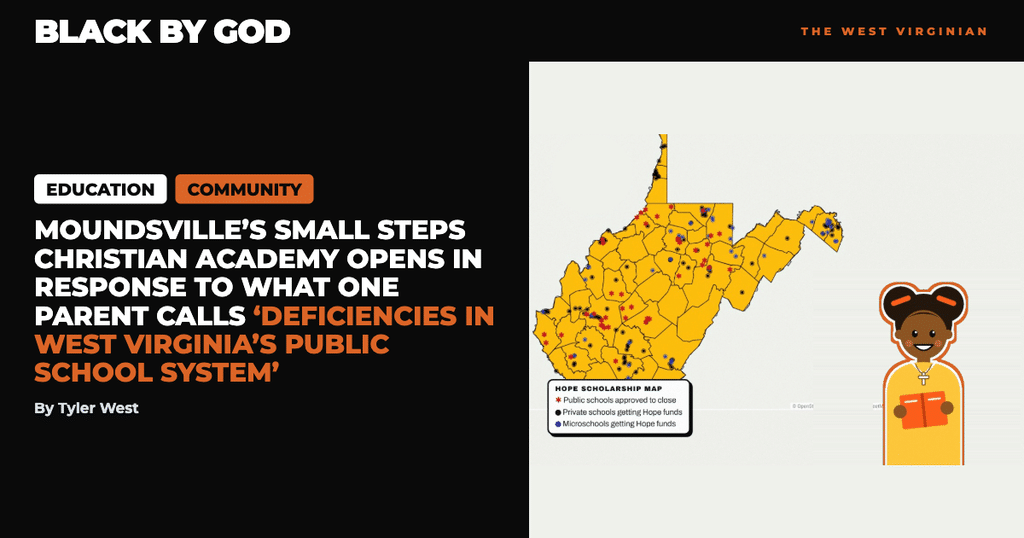
Small Steps is one of over fifty West Virginia microschools where students can use Hope Scholarship funds to pay for tuition (though there is no official count). These vouchers allow families to use taxpayer dollars, toward homeschooling, private schooling or microschooling, often at explicitly religious schools.
Proponents of microschools argue that they can be used to give parents better school choice for their children and enroll their children in schools that will teach their children in a way that they feel is more appropriate. Opponents of microschools cite the highly unregulated and unsupervised nature of these schools and express concern that there are not the safeguards to ensure that students are learning or safe.
Black By God reached out to Senator Amy Grady, lead sponsor of SB 268, which recognized microschools in law, for comment. Senator Grady has not responded at the time of publication.
While there is no federal definition of microschools, the West Virginia Legislature recognized and defined microschools in 2022. Microschools are schools started by one or more “teachers” that charge tuition and operate as an alternative to traditional public and private schools.
While not the same as homeschooling, microschools are regulated similarly. The 2022 law gives county superintendents minimal oversight over microschools operating in their county, exempts microschools from all education laws except for those relating to special education (though they are not required to accept special education students), and sets no limit on the number of students.
Joe White is the Executive Director of the West Virginia School Service Personnel Association, he raised concerns over the lack of accountability for microschools, “There’s no accountability whatsoever for any of the curriculum they do, any of the rules that they have. There’s no accountability.”
Microschool teachers are only required to have a high school diploma or equivalent and must perform assessments to track the academic progress of students, and submit those results to county superintendents.
The law gives four options and sets a baseline for acceptable progress for each one: a nationally recognized test, a test currently used in public schools and taken in a public school, a portfolio of the student’s work, reviewed by a certified teacher, or an alternative assessment agreed upon by the student’s parent and superintendent. Microschools must submit progress reports to the superintendent at grade levels three, five, eight, and eleven. Microschools may submit composite results as an alternative.
Despite requirements to interact with the county superintendent, Sobutka said she has had no involvement with Marshall County Schools while establishing Small Steps Academy. Yet so long as parents register their student as a homeschool student, they can receive Hope Scholarship funds and use those funds to pay their tuition at her expressly religious school.
Dr. Haines did not dispute that Marshall County Schools has not been involved with Small Steps, saying “I have little knowledge about the microschool to which you are referring.”
“It’s a Bible based school. That’s the best way to put it,” Sobutka said.
And while Sobutka is only taking K-2 students, she has ambitions to expand her microschool to include grades K-12. She does not plan on using traditional grading for older students either but said that she would work with students if they needed formal grades for post-secondary opportunities.
“If it came to that point when they’re in high school, and they’re looking into getting into a certain college, and they need to have their GPA. I could get one for them.”
While some microschools choose to operate in ways unique from public schools, others take an approach more similar, with fewer differences, such as not requiring vaccines.
Missy Mohr is Head of School at City on a Hill Christian Academy in Fairmont. City on a Hill is a non-denominational Christian K-12 microschool of approximately one-hundred and sixty-one students and over twenty faculty and staff. School is in-person four days a week, with students homeschooled on Fridays.
City on a Hill in many ways emulates public schools in terms of curriculum and academic rigor. They use the same standards as public schools, and in some areas add additional standards, such as in requiring courses on religion. They partner with external organizations to provide students with courses that they do not offer. Teachers at City on a Hill are not required to be certified but are required to have at minimum a bachelor’s degree.
The job description for a teacher at City on a Hill requires teachers to “Motivate students to accept God’s gift of salvation through Jesus Christ, have received Jesus Christ as your personal Savior, believe that the Bible is God’s Word, and have commitment to God’s Biblical standards for sexual conduct,” among other things.
Missy said that City on a Hill does not discriminate against LGBTQ+ students, though the school’s non-discrimination statement says that the school “is a religious educational ministry, permitted to discriminate on the basis of religion in accordance with our Statement of Faith” and does not include explicit protection for students on the basis of sexual orientation or gender identity.
Missy emphasized that this school has a strong focus on academic rigor and position students for success post-graduation. City on a Hill uses the traditional grading system and requires students to undergo standardized testing in order to monitor academic progress and ensure scholarship eligibility after graduation. While in many ways similar to a private school, City on a Hill makes use of the less regulated Microschool environment to give itself flexibility, such as in the in-school/ homeschool model, and with vaccine reporting.
There has been a push in recent years to roll back West Virginia’s vaccine requirements, led primarily by religious groups. In 2025 Governor Patrick Morissey issued an executive order allowing for religious exemptions to school vaccine requirements. A few months later the House of Delegates rejected a bill that would have codified Morrisey’s executive order into law. Morrisey’s executive order is currently pending before the Supreme Court of Appeals of West Virginia.
Childhood vaccination rates have declined nationwide in recent years. In the 2023-2024 school year the vaccination coverage of U.S. Kindergarteners for Measles was 92.7%, a decrease from 95.2% in the 2019-2020 school year, and below the 95% coverage threshold needed for herd immunity. There have been 36 Measles outbreaks so far in 2026. At least 83 children under the age of five have been hospitalized because of measles in 2026, one person has died.
City on a Hill accepts the Hope Scholarship, and was the top microschool hope scholarship recipient, receiving $548,975.90 of Hope Scholarship funding in the 2024-2025 academic year.
Black By God reached out to the Superintendent of Marion County Schools for comment but has not received a response by the time of publication.
While many microschools are established with religious affiliation, not all of them are. Some microschool founders are creating non-religious alternatives to public education.
Certified to teach in science and math, Eric Eisenbrey had been a public middle school teacher for ten years when he decided to open his own Microschool in Elkins, the Eyes and Brains STEM Center. This microschool accepts students K-12 and has approximately twenty-six students enrolled. Eric was motivated to open a microschool by the problems that he saw in the public school system with students falling behind.
“I really hit a point where I was just frustrated with the public school system, in the way that students were kind of handled… I was basically at a point where I realized I wasn’t going to be able to fix things from inside the school system.”
“You know, when you’re, when you’re teaching seventh and eighth graders that are not able to read at third grade level or struggle with basic arithmetic skills. You can’t help but feel like somebody’s dropped the ball along the way and wonder why more’s not being done.” Eisenbrey said.
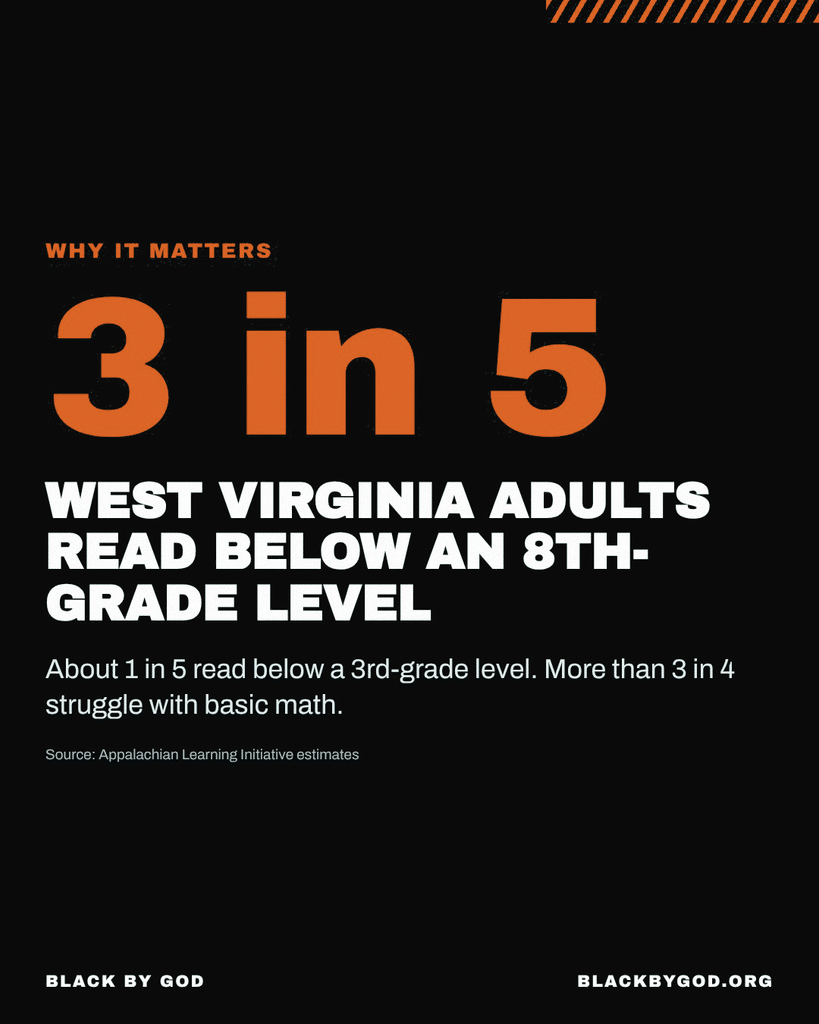
The Appalachian Learning Initiative estimates that three in five West Virginia adults read below an 8th grade reading level, and that 20.9% of West Virginia adults read below a 3rd grade reading level. Three in four West Virginia adults struggle to perform basic math.
Eric’s Microschool is non-religious and is marketed as a STEM (Science, Technology, Engineering, and Mathematics), though Eric’s primary focus is on meeting kids where they are and offering opportunities that they would not be able to find in the traditional public-school setting. The curriculum is created by Eric, using his prior experience as a public-school teacher to do so. Students learn the subjects that they would typically be expected to learn in a public-school setting.
Eyes and Brains does not use traditional grading scales or issue a GPA, rather Eric looks for mastery in skills when assessing students. Students do have a transcript and will complete a final portfolio piece. In terms of higher education programs and scholarships with a GPA requirement the issue has not yet presented itself as the microschool will be graduating its first student this year. So far, the microschool has handled this in a manner similar to homeschool families.
The microschool operates with minimal oversight from the county school system beyond communication with the attendance officer. The county attendance officer tracks student progress from year to year. Eric, as a certified teacher, assesses the students and submits a form to the county attendance officer attesting if the student has been assessed and is making adequate progress expected for their grade level and abilities. Eric provides parents with a more detailed report of their child’s academic progress.
This microschool does not collect information on student vaccinations out of privacy concerns and not feeling the need to due to the size of the school.
Black By God reached out to the Superintendent of Randolph County Schools for comment but has not received a response by the time of publication.
More and more microschools are being opened in West Virginia at a time when public school systems across the state are facing funding issues, declining student enrollment, and school closures and consolidations.
“They [schools] are closing, just like Logan County, my home county, they’re sent to close three.” White said. “I’m in an area where they’re hit hard, where 150 students make a big impact.”
School aid in West Virginia is in part determined by a school’s enrollment, meaning a decline in enrollment equates to a decline in funding for schools. At least eleven school closures have been proposed this school year, and one has been approved.
“I’m for school choice,” White said, “ We’ve always had school choice. When I was in school, we had school choice, we didn’t want to go to public school, we could go to private school, we could go to Christian school. We had that opportunity. But not at taxpayer expense.”
If you appreciate BBG's work, please support us with a contribution of whatever you can afford.
Support our stories
Author
Related Articles
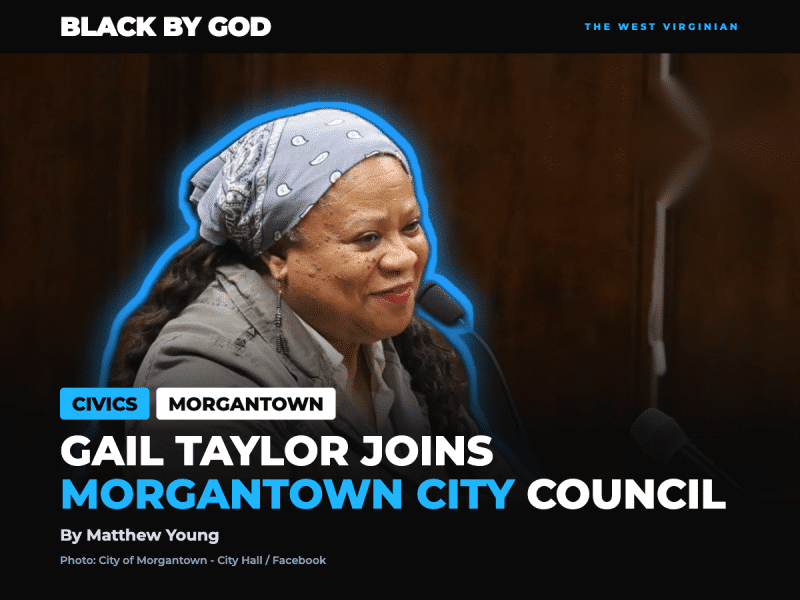
Gail Taylor appointed to Morgantown City Council vacancy
‘My goal is bringing consensus. I think it helps to have seven people who can get on the same page’
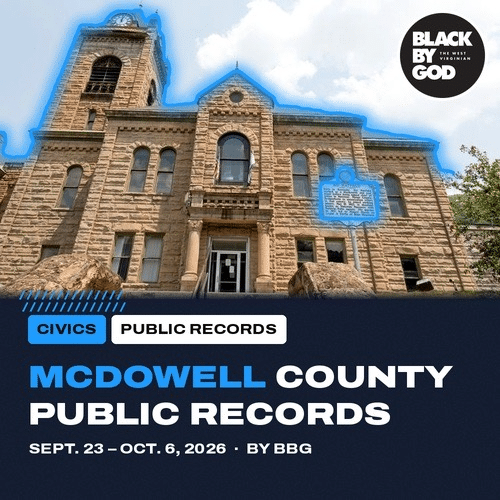
McDowell County Public Records: Sept. 23 through Oct. 6
Official McDowell County public records filed Sept. 23–Oct. 6, 2026, including municipal land transfers, marriage licenses, death certificates, and coal heritage metrics.