
ESSAY: Bricktop Was Here: Appalachia’s Glamorous Debut on Fashion’s Biggest Stage
By: Zona Motel
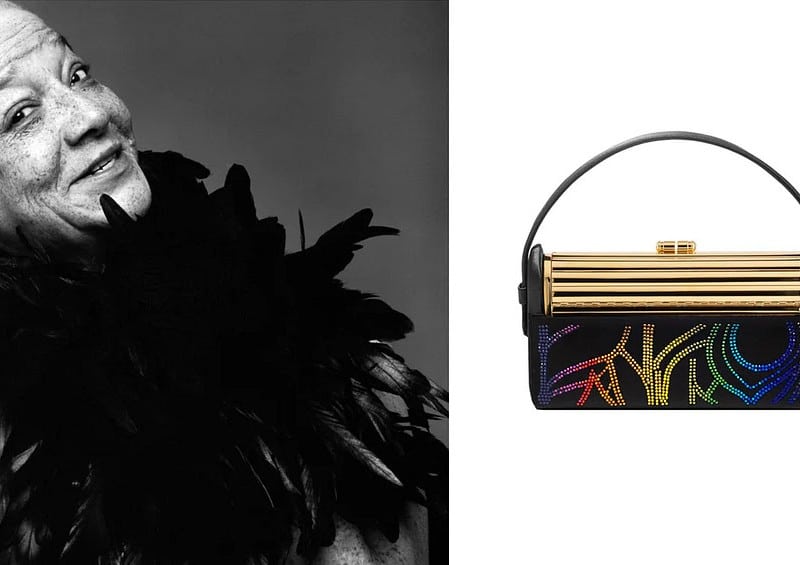
Ada Beatrice Queen Victoria Louise Virginia Smith was born on August 14, 1894, in Alderson, West Virginia, nicknamed Bricktop for her fiery red hair. A freckled-faced Black woman who became one of the most powerful figures in international nightlife, she hosted royalty, jazz legends, and literary giants with a glittering café society guest list in her clubs across Paris, Rome, and Mexico City: Cole Porter (whom Bricktop said made her), Ernest Hemingway, Duke Ellington, Langston Hughes, King Edward, Noël Coward, Gloria Vanderbilt, to name a few —those who showed up in style and stayed because of her presence. She built an empire of elegance rooted in style, calling herself “100% American Negro” —and always claiming Appalachia loud and proud. In every interview, in every room, across every table, she announced, “I’m Bricktop from West ‘by God’ Virginia.”
“By God” is how West Virginians distinguish ourselves from the other Virginia—a sacred punctuation to our sense of Place: half a joke, half a prayer. Bricktop made “by God’ go viral long before the internet existed.
She held onto West Virginia, even though she had the world.
As a sixth-generation West ‘by God’ Virginian myself, I understand that pride. I stayed in the hills, while Bricktop took her roots abroad.
That spirit inspired the collaboration between my independent Black-owned and Black-centered newspaper, Black By God: The West Virginian, and the legendary handbag house Bienen Davis, known for dressing First Ladies and film stars. Black By God delivers news to barbershops, beauty salons, senior centers, and porches across the mountains. Bienen Davis, founded in New York City in 1931, merges American design with Italian artisanship. Their handbags aren’t just accessories—they’re heirlooms, like clippings from a hometown paper.
Together, we designed a line of purses in Bricktop’s honor and brought it to the Superfine: Tailoring Black Style 2025 Met Gala.
It wasn’t just about fashion. It was about Appalachian identity and Appalachian storytelling—about Bricktop’s legacy with newsprint culture—something she was a fan of, keeping her name in publications across decades.
The Met Gala—often called the Oscars of fashion—is an annual fundraiser for the Metropolitan Museum of Art’s Costume Institute. This year, Appalachian dandyism showed up in a satin handbag.
Bricktop orchestrated elegance as her craft. That same commitment to care lives in the craftsmanship of Bienen Davis.
We united around a shared belief in Place and the 2025 Met Gala’s theme: Superfine: Tailoring Black Style. The theme celebrates the rich history and influence of Black style in the fashion world, and it was the perfect platform to showcase the Bricktop Collection. As Jeremy O. Harris wrote in Vogue’s May 2025 issue, “To be a Black dandy is to dress as though you know you’re loved—and therefore have no shame.”
Bricktop didn’t like the word Black. In an interview with Studs Terkel, she said, “Don’t say Black—I hate Black.” I think about that often. Words evolve. And so do we.
If I could sit with her now, I’d tell her what it means today. That Black isn’t a box—it’s a celebration. A word of pride, of power, of presence. It means legacy, not limitation. Representation, not restriction. That’s why I named my publication Black by God.
Meredith German, creative director of Bienen Davis and a white “by God-ian,” wanted to get the theme right. She knew her role wasn’t to define superfine Black tailoring—but to help carry the story forward. She knew about Bricktop. And she knew where to find the story—through me.
I’ve got a bit of a reputation as a storyteller. It never takes long before I’m spinning tales about Bricktop: how she taught Josephine Baker the Charleston, how John Steinbeck once sent her a taxi full of roses to apologize, or how the night the Nazis marched into Paris, she escaped with the help of Lady Mendl and the Duchess of Windsor—fleeing with a one-way ticket and a trunk of couture by Edward Molyneux.
Meredith knew I was writing a book about Bricktop—to bring her home, even if only in memory or bones.
I first met Meredith at her surf shop in Lewisburg, West Virginia. Yes. A surf shop in the mountains? That’s West Virginia—full of surprise and unexpected elegance tucked away in hollers and hills.
Her shop carries high-style gems. But even before we met formally, I already knew her. In my twenties, I worked at Schwabe-Mays, an upscale men’s boutique in Charleston, where I sold suits by Oxford and Hickey Freeman to her grandfather. In Appalachia, we know people through their people.
So when Meredith and I began dreaming up the Bricktop Collection for the Met Gala, we weren’t just designing a purse—we were honoring how Bricktop lived and how she should be remembered. Bricktop was our people, and in true Appalachian fashion, remembering means keeping your people alive by telling their stories. That’s dandy culture, too—where how you dress is inseparable from how you honor those who came before you.
This collection remembers the West Virginia coal miners who scrubbed off soot to shine for Sunday and the seamstress grandmothers like my Granny May, who would undress me in a heartbeat to fix a hem or press me right.
How you show up in the world reflects who you are and who raised you.
And then came our moment.

Supermodel and guest of British Vouge’s editor Edward Enninful Vittoria Ceretti stepped onto the daffodil-blue Met Gala carpet, lined with signature florals and those iconic steps. In her hand: the Bricktop Xenon Clutch.
Vittoria wasn’t just carrying a bag—she was carrying a piece of history—styled by Dena Giannini, who understood the power of Bricktop. I exhaled as Vittoria passed the clutch to a handler at the top of the stairs. Bricktop had officially entered the archive!
This year, the Met Gala raised over $26 million—the most in its history.
That’s so Bricktop.
She was about her money.
She knew how to make it, keep it, and multiply it. Brick was always going to get the bag.
I have no doubt she would’ve leaned in to Tracee and Diana Ross, flashed a smile and a wink to make her pitch:
“You wore that carpet like a stage, Darlings. I know your people are from West by God Virginia—same as me. This bag is about those roots. You simply must have one of these Bricktop Collections.”
Bricktop wasn’t named in the Met Gala press releases. Didn’t matter.
She walked in anyway—on the arm of a supermodel, guest of fashion’s most powerful editor, on a night curated for Black icons like her—holding the memory of every Black dandy and Appalachian fashionista who ever arrived dressed to be seen and counted – ‘cause by God, we’ve always been here.
This article originally appeared on Zona Motel, a community and online space dedicated to great literature. Subscription funds go directly to their authors. You can subscribe here.
If you appreciate BBG's work, please support us with a contribution of whatever you can afford.
Support our stories
Related Articles
From Sketch to Stitch: How Dashanti Johnson Is Turning Denim Into a Fashion Statement
Designer Dashanti Johnson shares her journey turning a passion for art into a custom denim business focused on youth entrepreneurship and creative agency.
Hallway Style: Fall Fashion Teens Are Wearing Now
South Charleston High School students showcase relaxed denim, graphic tees, and early-fall fashion trends in a feature by Kid Correspondent Jayli Phillips.

From West Virginia to Los Angeles, Myles T. Blends Golf, Fashion and Music
Creative producer Myles T. blends West Virginia roots, music placements, and streetwear in a Malbon Golf fashion shoot for BBG Sports’ National Golf Month series.