Community energy: a bright opportunity for the Mountain State
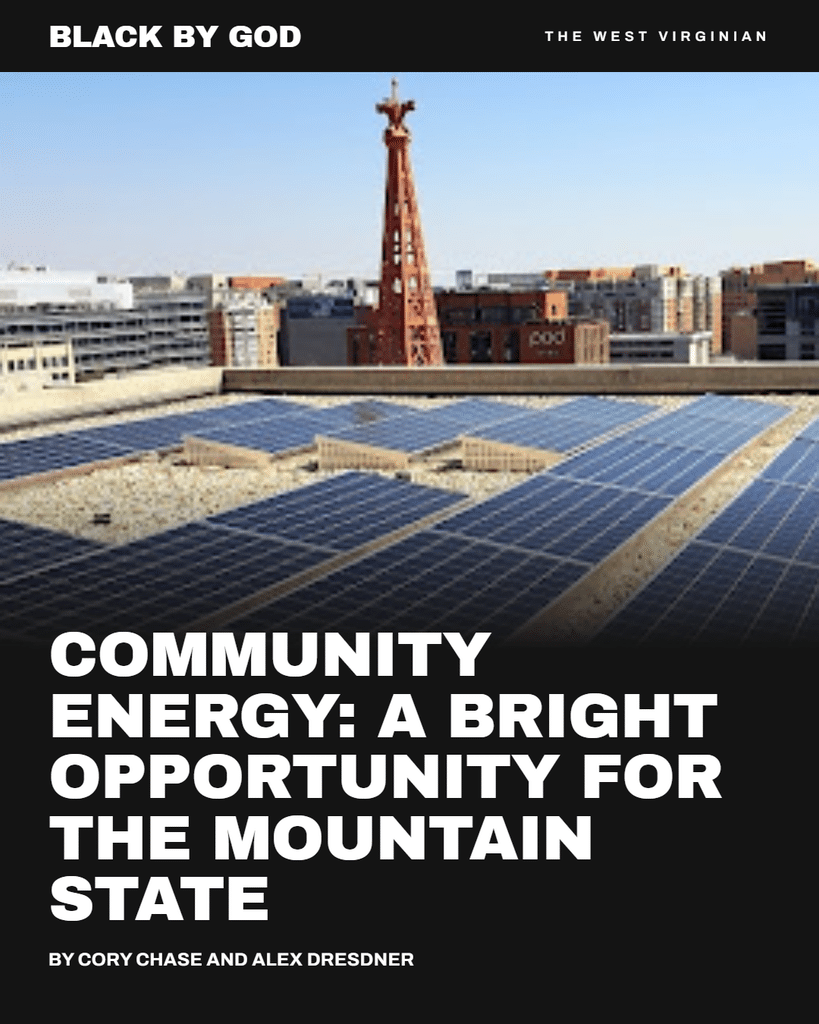
By Cory Chase and Alex Dresdner,
Imagine your daily commute to work. How many abandoned lots, large warehouse buildings, old strip mines, or empty fields do you pass by?
These places don’t have to be an eyesore, or worse, a source of asthma-inducing pollution. Instead, they can produce clean, affordable energy for our local communities. West Virginia lawmakers can make this happen by passing community energy legislation.
What is community energy?
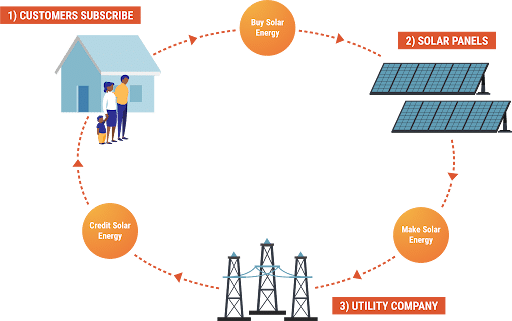
Community energy allows more people to share in the benefits of local power, without the need to install equipment at home. In short, community energy works by bringing energy from a local open space, like a parking lot or field, to many customers. Participants can subscribe to a project, and get credits on their utility bill for their portion of the clean solar energy produced. Subscribers save money while helping to meet growing energy demand with local solutions.
Community energy would make solar power easily available and affordable in West Virginia, even if you can’t install solar on your roof. Community energy’s proven success in 24 U.S. states shows that solar energy can create good jobs and keep money in our communities while avoiding the air pollution responsible for generations of respiratory illnesses in Black communities. It’s time to bring this opportunity to West Virginia.
With community energy, you — not your utility company — get to choose the energy source that is best for you and your family.
Want to dive deeper into how community energy works? Check out the Community Solar Guide by nonprofit Solar United Neighbors to learn how these projects become a reality.
Rooftop solar is a great investment for saving money on your monthly electric bill. But right now, renters, homeowners with shaded roofs, and low-income West Virginians are left out of solar energy’s benefits. Only 0.01% of West Virginian homeowners have rooftop solar.
In addition, there are racial disparities in who can access rooftop solar. To begin, just 44% of Black West Virginians own their homes, compared to 76% of white West Virginians. Black homeowners often live in older homes that require more repair work prior to solar installations, driving up the costs. Additionally, there is evidence that solar companies tend to be located near majority white and high-income areas, resulting in fewer options for Black homeowners to choose a competitive bid.
Building a homegrown solar workforce in West Virginia
Solar energy builds on the legacy of West Virginia’s energy economy, creating jobs and keeping hard-earned dollars in the pockets of local communities.
Community energy projects are labor-intensive and require skilled electricians, contractors, and technicians to design, wire, connect, and maintain. Solar also creates jobs in sales, operations, and the manufacturing of components. When combined with workforce development programs, increased solar demand can create good-paying unionized energy jobs for laid-off coal miners and youth.
RePower Appalachia, a program of Coalfield Development, is already building the solar economy from the ground up. They train local workers and provide technical assistance to businesses with the goal of bringing solar-powered development to rural areas across the state.
“Rooftop solar can’t reach a renter in Huntington, or a family whose roof faces the wrong way, or a church with more congregation than roof space,” said Dan Conant, founder of West-Virginia-based installer Solar Holler. “Community energy is how those folks finally get in on lower bills, and how the money starts circulating here instead of heading out of state. And every array gets built by somebody’s kid from down the road with a union card and an apprenticeship, who doesn’t have to leave West Virginia to make a good living.”
According to SEIA, there were only 394 solar jobs in West Virginia in 2025. Clearly, West Virginia is not meeting its full potential for the solar economy — but community energy can help us get there.
Clean air, healthier communities
Generations of exposure to dangerous pollutants from fossil fuels has left its mark on our communities. Air pollution from coal, oil, and natural gas production contributes to nearly 200 early deaths per year and 10,000 worsened asthma conditions among West Virginia’s children.
Unlike fossil fuels, solar panels produce no air pollution, and can chart a path to healthier, more resilient communities. Community energy projects can be built on abandoned mines, former industrial sites, and other environmentally damaged places, called brownfields, that cannot be redeveloped into housing or agricultural land. In fact, the Environmental Protection Agency has identified 6,849 potential brownfield sites for solar development in West Virginia, making it a ripe opportunity to give these sites a new life. Installing solar panels on brownfield sites has already demonstrated success in neighboring states Ohio, Maryland, and Pennsylvania, powering the local grid with clean, affordable energy.
How you can advocate for community energy
West Virginia families deserve the freedom to choose solar — for our savings, our economy, and for our health. But in order to bring community energy to West Virginia, our legislature needs to hear from you.
To advocate for community energy, sign up for Solar United Neighbors’ email list. You’ll receive opportunities to learn about solar, meet your neighbors, and take action. Want to take your advocacy a step further? Contact us at WVteam@solarunitedneighbors.org and we’ll walk you through how to set up a meeting with your legislators.
If you appreciate BBG's work, please support us with a contribution of whatever you can afford.
Support our stories
Related Articles
Blockchain, crypto, and the new DUNA law: lawmakers and nonprofits gather for digital innovation summit
Despite low broadband ranks, West Virginia lawmakers passed the DUNA Act and debated stablecoin bills. Learn how blockchain legislation aims to spur economic growth.