
From Exploring New Business Models to Global Expansion, Ample Growth Opportunities Exist For Black Farmers in West Virginia

By Jeffrey McKinney, BBG Folk Reporter
Whether in times of triumph or hardship, there are mega growth opportunities for Black farmers in West Virginia, who are maneuvering a strenuous business landscape. To help them reap a windfall, Black industry experts contend those entrepreneurs may do well to initiate new operating approaches, expand into unexploited businesses and seize partnerships to help enlarge their market reach locally, domestically and globally.
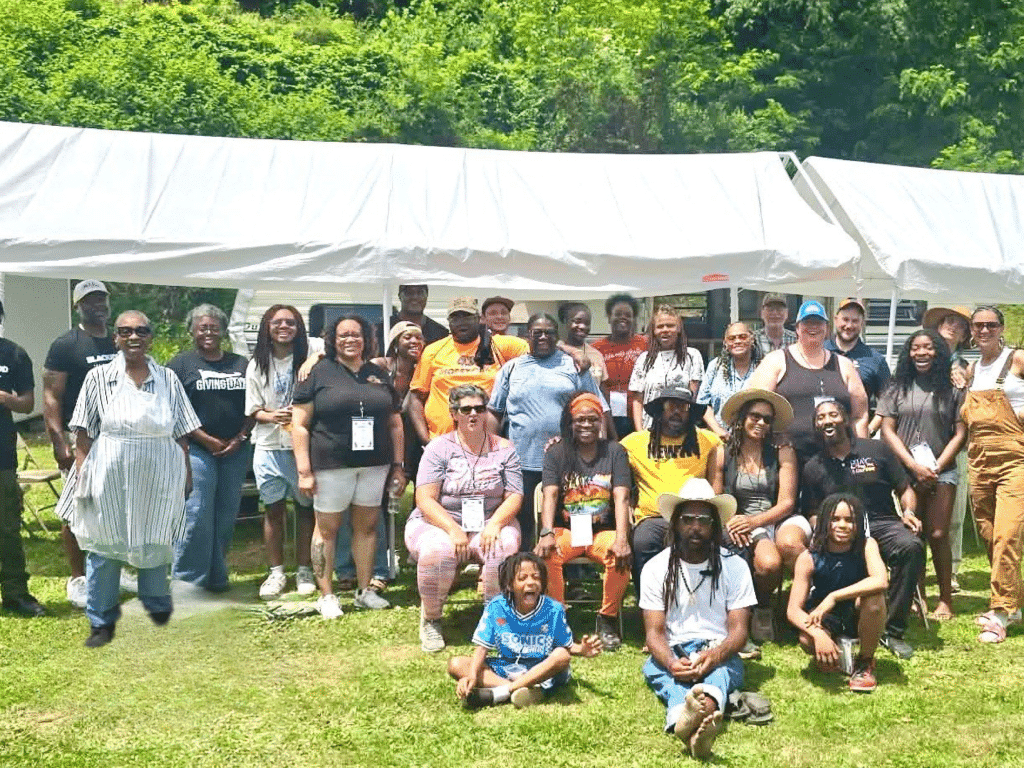



Now is a promising time for Black entrepreneurs to enter or expand in West Virginia agribusiness, says Dr. Clinton Arnold, assistant professor and chair of the Business Administration Department at West Virginia State University (WVSU). He insists the strongest opportunities are not simply producing more undifferentiated commodities or limited to owning acreage.
Owning a large share of the value chain is important
“They are in owning more of the value chain: specialty production, aggregation, processing, branded products, institutional sales, distribution, and agritourism,” Arnold says. Others BBG spoke with agreed, pointing out Black farmers should be open to enlarging their product offerings beyond customary land ownership.
There are also businesses to be built in areas: transportation, cold storage, food manufacturing, technology, marketing, retail, and other industries linked to agriculture, says Jason Tartt, owner of T&T Organics. He runs a 350-acre farm in McDowell County in West Virginia that mainly offers poultry products, forest botanicals, and honey.
“When we look at agriculture as an economic system instead of simply farming, the opportunity becomes much larger,” Tartt said.
Insiders who track West Virginia’s agricultural sector say its largest potential growth areas include value-added poultry livestock and meat products, specialty crops controlled environment & urban agriculture, and food processing branded products. See more here.
Favorable conditions are truly needed now as farmers nationwide – including Black farmers – are struggling with challenges like rising diesel prices from the U.S.-Iran war, inflation, higher tariff costs and severe cuts to federal farm program. All told, U.S. farm income in 2026 is projected at around $158 billion, roughly $4.3 billion under 2025.
Central Appalachia and the African Market: A potential strategic fit
As such, seasoned producer Tartt highly advises Black farmers think globally, given they are African diaspora members. “With Africa’s agriculture and agribusiness economy projected to become a roughly $1 trillion industry by 2030, there is an opportunity to develop business relationships that connect Black entrepreneurs in the United States with producers, businesses and markets on the African continent.”
He stressed that is particularly relevant for Central Appalachia. “We must build our own supply chains and Africa is a big part of that. For me, that means thinking about how Central Appalachia, Africa and the broader African diaspora can produce together, trade together, invest together and build wealth together.”
Even so, Arnold noted while the continent represents potential demand across a vast market, it’s not a promise of export revenue for U.S. farmers. They say a practical move for a West Virginia farmer may be a specific partnership with an African buyer based on a product it can supply consistently and profitably.
Tartt added another major opportunity is connecting Central Appalachia to broader markets. “Long term, I believe Appalachia can become a production, processing and distribution region serving markets well beyond our immediate communities.”
Stakes high in West Virginia market worth nearly $950 million
As for the Mountain State, the stakes are high with the market steadily rising in value. Based on the most recent figures, West Virginia farms sold $947.8 million in agricultural products in 2022, up 26% from 2017. The figures were supplied by Arnold and Dr. Saman Bandara, associate professor, Business Administration Department, (WVSU).
Arnold says the entire marketing is larger when other “associated” or downstream products and services are added. Yet the representation inequity is huge. Data from 2022 showed 39,109 producers overall in West Virginia, with only 43 cited as Black American.
“That disparity should be understood as both a warning about historic barriers and a call to build a stronger pipeline of land access, capital, education, and market relationships.”
Further, Arnold says there is room to substitute local production for imported food. He explained West Virginia consumers, schools, hospitals, restaurants, grocers, food banks, and other institutions create demand well beyond the state’s farm-gate sales.
“Small-scale entry can be paired with higher-value models. The state’s terrain limits large-scale row-crop expansion in many counties, but it can support specialty vegetables, protected cultivation, berries, mushrooms, medicinal and forest botanicals, small livestock, value-added foods, and agritourism.”

Wide mix of growth options beyond crop and livestock sales
Tartt stressed farmers need commercial kitchens, meat and poultry processing, cold storage, aggregation facilities, refrigerated transportation, distribution networks and access to markets.
“Developing regional processing and distribution infrastructure allows communities to capture a much larger share of the agricultural dollar.”
Moving from basic farm functions into different channels can potentially help boost revenue, create new customer markets, and enhance sustainability among benefits. Dr. Alan Letton, director for the Center for Economic & Community Development and Isolated Communities at Marshall University, offered some scenarios.
For instance, if you want to be a truck driver and start contracting food distribution from your farm, you can. Another choice: Be a food supplier and deliver to small grocery stores. You can be a meat processor for a local butcher. “I know of very few people in the Black community in West Virginia taking advantage of these business opportunities.”
And there is a large technology component bringing even more possibilities. If you have a fleet of drones, you can monitor crop health. Letton explained those drones can optimize plant hydration and fertilization. “So, it’s way more expansive than people realize.”
Tips for Black farmers might focus on to help maximize prospects
Here are tips that Black farmers can begin to consider doing now. The first four are condensed and edited emails from Arnold and Bandara. The rest are from Tartt:
• Begin with a customer, not a crop. Interview prospective buyers and obtain things like letters of interest and purchase commitments before investing heavily. In the value-chain process, determine issues such as required volume, packaging, delivery frequency, certifications, and payment terms.”
• Build an enterprise-level financial plan. Prepare separate revenue, variable-cost, fixed-cost, labor, and cash-flow assumptions for each venture. Keep enough working capital to help survive events like delayed harvests, seasonal sales, and slow-paying customers.”
• Create a measurable three-year growth plan. Track key performance indicators like gross margin by product, customer concentration, repeat purchases, and debt-service coverage.
• Use education and technical help as capital. You can do that by working with the West Virginia State University Extension, WVU Extension, West Virginia Department of Agriculture, and the West Virginia Small Business Development Center.
• Don’t only think about owning a farm. Instead consider where you can own a piece of the agricultural value chain.
• Partnerships matter. Farmers should build relationships with universities, USDA agencies, conservation districts, extension programs, community development organizations and experienced producers.
• Production is only one part of the equation. Entrepreneurs need to understand markets, pricing, branding, processing, regulations, logistics and access to capital.
• Farmers and young people interested in agriculture should start by understanding the USDA ecosystem, including USDA Rural Development, Natural Resources Conservation Service, the Farm Service Agency and programs run through universities. One program, especially for Black students and families, is the USDA 1890 National Scholars Program
For Black farmers and entrepreneurs, Tartt says the biggest opportunity is about positioning Black entrepreneurs all over the agricultural economy — from the soil to processing, logistics, technology, retail and ownership.
“If we do that, agriculture becomes more than food production. It becomes a strategy for rebuilding communities and creating generational wealth.
Concurrently, Black farmers’ perennial history of losing property and other barriers like under representation should be a call to build a stronger pipeline in many areas, including land access, financing, education and market relationships.
Arnold says “Our research on minority-owned business success reinforces a basic principle: capital matters, but capital without financial control, education, planning, and access to experienced advisors can increase risk. Farmers should secure the market, build the numbers, and then scale.”
If you appreciate BBG's work, please support us with a contribution of whatever you can afford.
Support our stories
Related Articles
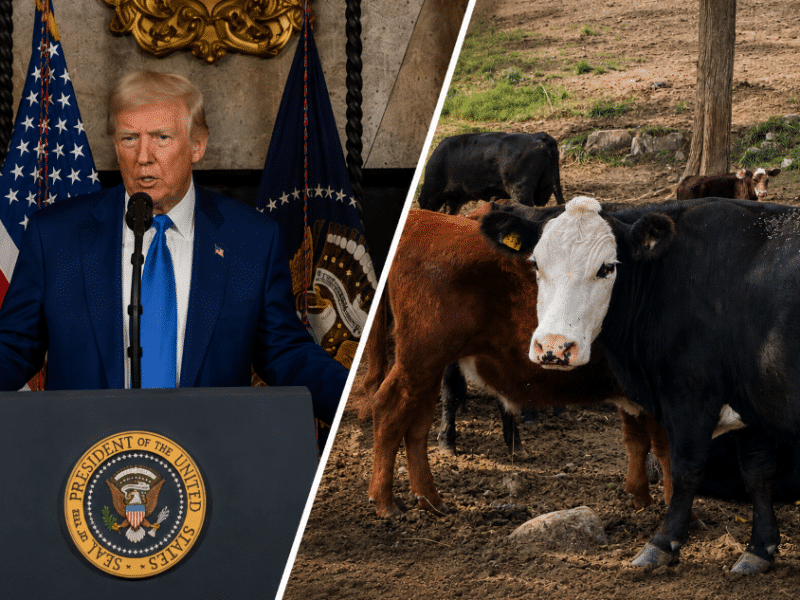
WV farmers question Trump’s decision to import beef
Local beef producers doubt the move will lower prices and believe it undercuts American farms.
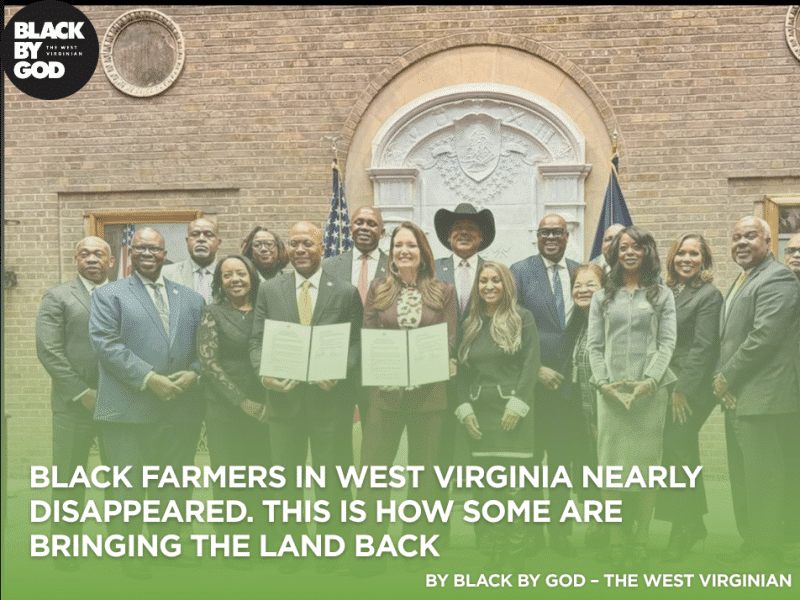
Black Farmers in West Virginia Nearly Disappeared. This Is How Some Are Bringing the Land Back
From 504 Black-owned farms a century ago to just 31 today: Black By God examines how Black West Virginians are reclaiming farmland, legacy, and food systems.
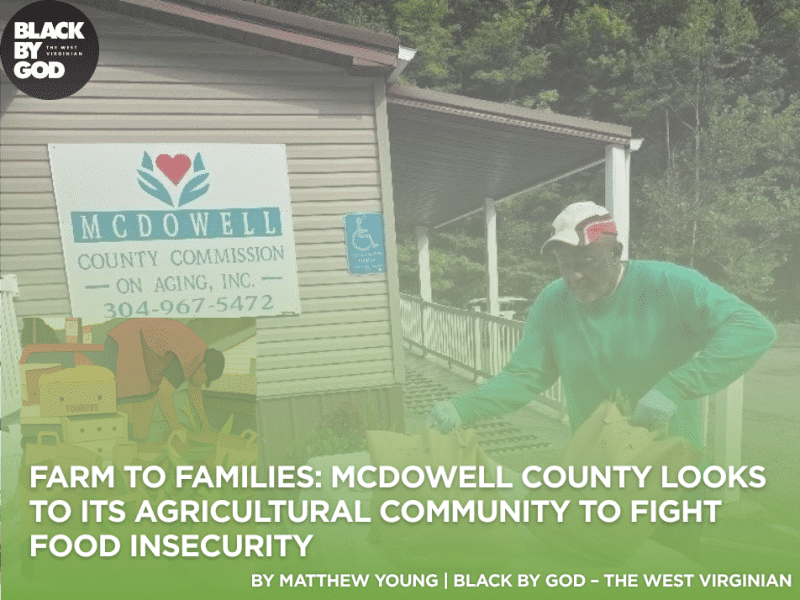
Farm to Families: McDowell County looks to its agricultural community to fight food insecurity
McDowell County’s Farm to Families program provides 50 vulnerable households with $40/week in locally grown produce, tackling food deserts and economic equity.