
Charleston native and pioneering Black journalist Tony Brown dies at 93
Remembering Tony Brown: The iconic host of Tony Brown’s Journal and Howard University dean began his historic journalism journey at Charleston’s Garnet High School.
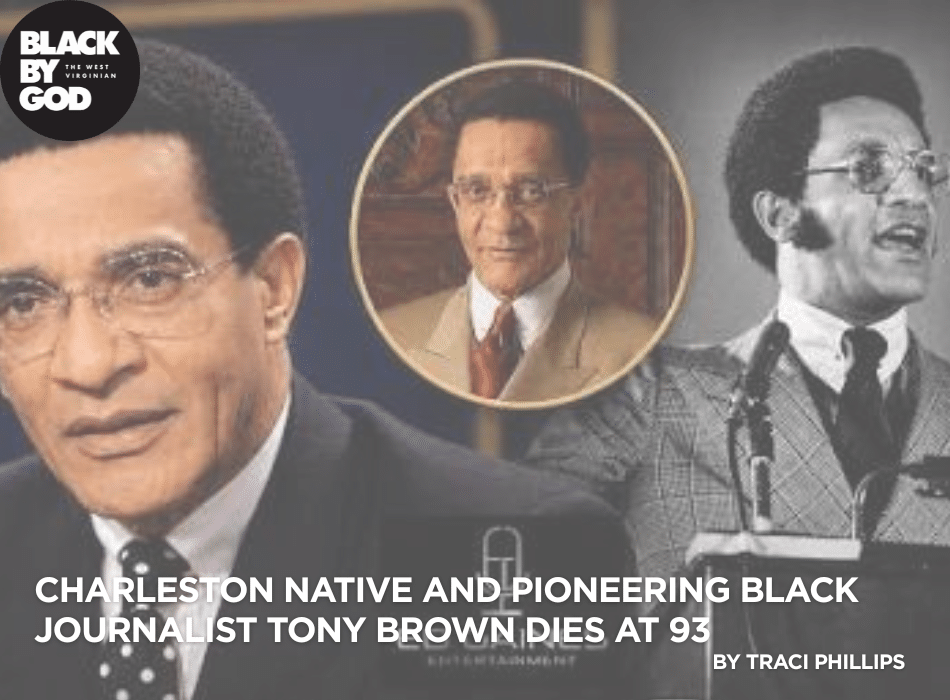
By Traci Phillips, BBG
CHARLESTON, W.Va. – Tony Brown, the longtime host and executive producer of Tony Brown’s Journal, died June 17 at his home in Newport News, Virginia. He was 93. Brown’s death marked the end of a career that spanned more than five decades in journalism, television and education.
Before Tony Brown became one of the most influential Black journalists in American television, his story began in Charleston.
Born William Anthony Brown on April 11, 1933, Brown was the youngest of five children. He grew up in Charleston during segregation and attended Boyd Elementary and Boyd Junior High before enrolling at Garnet High School, the city’s all-Black high school.
It was at Garnet that some of the qualities that would later define Brown began to emerge. He excelled in English and drama, ran track, performed in school plays and was elected class president. Before graduating in 1951, Brown even took his voice to the airwaves, performing portions of Shakespeare’s Julius Caesar on Charleston radio station WGKV.
Years before millions of people across the country would know his voice, Charleston had already heard it.
Garnet was more than a school for Charleston’s Black community. During segregation, it became a place where generations of Black students were educated and encouraged despite the barriers around them. Brown was part of a remarkable group of Garnet graduates that also included civil rights leader Rev. Leon Sullivan, artist and educator Della Brown Taylor Hardman and pioneering physician Dr. John C. Norman Jr.
Brown carried that foundation with him when he left West Virginia. After serving in the U.S. Army, he attended Wayne State University in Detroit, earning bachelor’s and master’s degrees. He began his journalism career at the Detroit Courier and later moved into television.
His career changed course nationally when he became executive producer and host of Black Journal, a public television program focused on Black life, race and inequality. The program eventually became Tony Brown’s Journal, which Brown hosted for decades.
Through the program, Brown created space for conversations about Black politics, education, economics, culture and community that were often missing from mainstream television. He interviewed more than 1,000 guests over the course of his career and became a familiar face in Black households across the country.
Brown’s influence also reached beyond television. He founded Howard University’s School of Communications and served as its dean. Decades later, he became the inaugural dean of Hampton University’s Scripps Howard School of Journalism and Communications, helping prepare another generation of journalists and storytellers.
He was also an author, columnist and businessman who spent much of his career pushing Black audiences to think about economic independence, education, media ownership and the importance of controlling their own stories.
Brown could be outspoken, and his views did not always fit neatly into one political camp. But throughout his career, he was willing to ask questions, challenge conventional thinking and put issues affecting Black Americans in front of a national audience.
For West Virginia, his death is also an opportunity to remember where that journey started.
Tony Brown did not come from New York, Washington or one of the places usually associated with the rise of national Black media. He came from Charleston, from a segregated Black school in the heart of Appalachia and from a community that produced Black educators, doctors, activists, artists and leaders whose influence stretched far beyond the Mountain State.
Brown took what was nurtured in those Charleston classrooms and eventually carried it into millions of homes across America.
Before he became a television pioneer, educator and one of the most recognizable Black journalists of his generation, Tony Brown was a young Black West Virginian finding his voice at Garnet High School.
The country would eventually hear it.
If you appreciate BBG's work, please support us with a contribution of whatever you can afford.
Support our stories
Related Articles

The Care Behind West Virginia Abortion Billboards
A campaign by Shout Your Abortion & Women’s Health Center of West Virginia highlights available healthcare services for Black women and underserved groups.
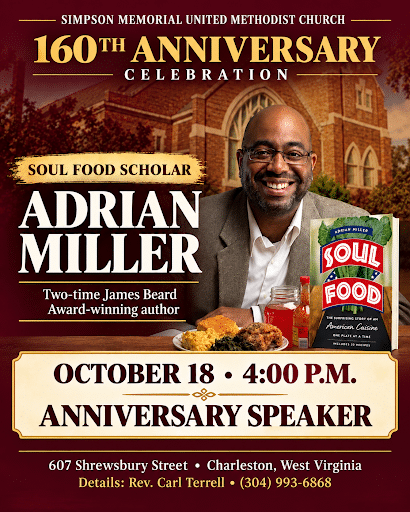
Soul Food Scholar Adrian Miller to Join Simpson Memorial’s 160th Anniversary Celebration
The award-winning author will visit Charleston to celebrate the stories preserved through Black churches, kitchens and communities.

Cabell County Public Records: Sept. 23 through Sept. 29
Official Cabell County Land Transfers and Death Certificates, filed Sept. 23–29, 2026, including property deeds in Huntington, Barboursville, Milton, and Kyle Districts.