It’s Already Ours: A Story of Black Technologists
“What is a vision for reparative technology?”.
By Diamond Hardiman and Melissa Kurkut
Over the past few years, Media 2070 has been interrogating the role of technology in the fight for media reparations. Technology holds a critical piece of media infrastructure, and therefore is a high priority site in the fight for repair. The technologies used to power social media, surveillance tools and data centers act as distributors of information, amplifiers of anti-Black narratives and use community resources, such as land and water, to heighten misinformation and compile troves of personal data used to support privacy violations in service of corporate wealth and to perpetuate state violence. As communities grapple with the reality of the environmental degradation and racism caused by data centers, the real-life violence born of anti-Black narratives and the civic impacts of disinformation–the demands of the present and future must include repair. Media 2070 has historically asked, “What worlds are possible on the other side of media reparations? What becomes possible personally, communally and politically when Black people are able to own our stories from ideation through distribution?”. The team has found responses to this question in universities, newsrooms, and art activations. And now Media 2070 asks it of technology infrastructure: “What is a vision for reparative technology?”.
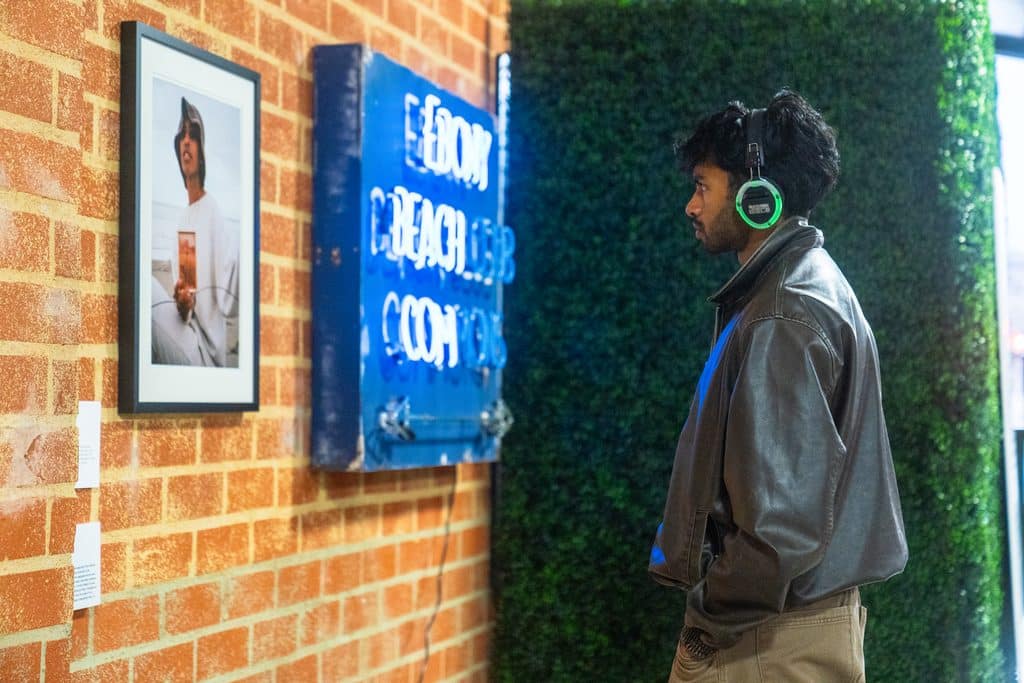
Through research, panels and exhibitions, the research has asked what is possible when technology is viewed through a Black liberatory lens. In these conversations, creativity, traditional storytelling methods and everyday Black ways of being have been cited as important technologies in our community. These responses trouble the mainstream narrative that the center of technology and its evolution rests in Silicon Valley. Silicon Valley cannot own technology, or its future, when “Technology is as much a culture as it is a feat of engineering…Storytelling [is] the original technology upon which all other technologies are built”, a concept shared by Shari Frilot, senior programmer at the Sundance Film Festival and chief curator of the New Frontier section. In order to define the role of technology in a future of repair, it must be proclaimed that the present and future of technology belongs to the children, the matriarchs, the artists and the storytellers.
We’ll bring the best from BBG right to your inbox. You can easily unsubscribe at any time.
Sign Up for our Newsletters!
Black communities are technological and have a deep lineage of engaging technology in ways that invite repair rather than devastation. Black ancestors that encrypted escape plans into spirituals are coders. Grandmothers that retell family stories over and over again until you’re so immersed in a memory that you feel like you were there are XR creators. Children that reinvent Black language every half-generation are the original algorithm. So when it comes to a reparative vision for technology – we are the visuals. In Black hands focused on sovereignty, technology becomes much more beautiful, communal and reparative.
A Vision for Reparative Technology
Media 2070’s steps towards envisioning a reparative vision of technology include world-building with those already practicing the future in which we envision. A group of mediamakers known for living at the horizon of possibility are the artists. Art serves as its own form of technology that intertwines memory, preserves culture and tells future victories.
As mainstream narratives continue to live out anti-Blackness, we lose accurate information about those resisting technological violence. Institutions like Milele Museum tell a different history and vision about the possible uses of technology. Led by Executive Director and Co-Founder Melissa Kurkut, Milele Museum proclaims that “technology, when used with care, can bring people closer to their roots.” As an artist, curator, and researcher, she blends ancient technologies and emergent ones to serve culture and memory. As a study into the Black reparative ownership in technology, we invite the lessons found within the story of Milele Museum, an organization that works to bring about restitution.
A World Built in Our Image
My ancestors are technologists. They developed techniques for time, iron, weaving, for engaging with animals, and for healing with plants. They built ceremonial practices that carried knowledge across generations without necessarily writing it down. All of that is technology. Colonial powers removed material heritage together with the knowledge systems those objects belonged to. Knowledge is in use, and use is hard to sustain when a vital object is removed to a country miles away, displayed as African history. The label makes it sound like the past while the removal is what made it the past. These foreign institutions have earned millions from displaying them ever since, while African cultural infrastructure had to begin again from almost nothing and still largely depend on foreign funding and visitors.

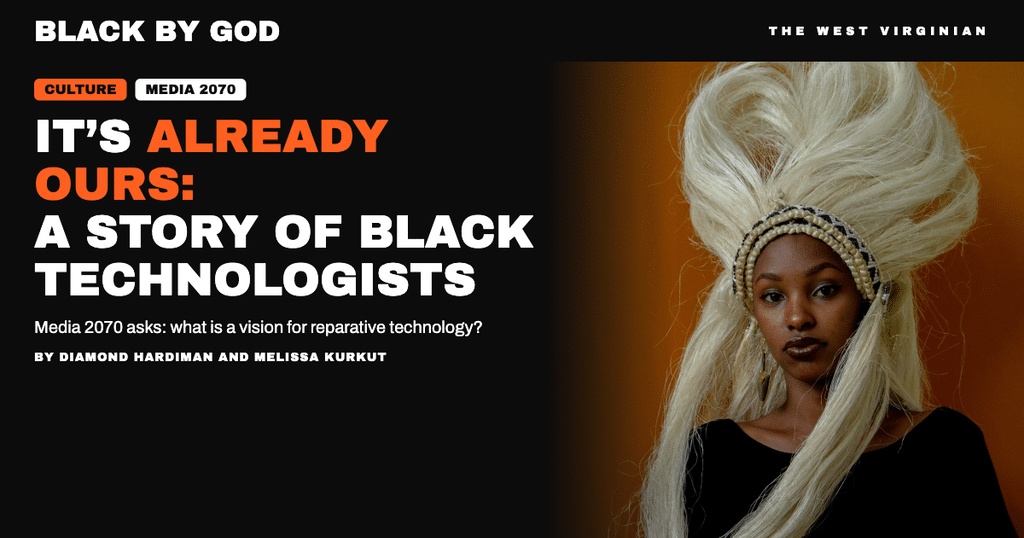
Memory can also be treated as a working technology. For an example, I’d like to take you to 2022 where I’ve lived for over a year in my mother-country Rwanda to connect with my heritage and the wider creative industry. In response to what I’ve witnessed, heard, felt, and tasted, I created an editorial photography series about Ndabaga. A Rwandan heroine who disguised herself as a man to take her father’s place in Intorero, the training camp where warriors were preparing to be part of the king’s army. Only men were allowed, but she went anyway after her father’s death. She became known as one of the strongest and skillful members of the force. For the series I reimagined her crown using the Umugara, a warrior headpiece worn in ceremonial dance and worn only by men, a marker of strength. Ndabaga initially knew that what she wanted to achieve was not possible for her. She still found a way in rather than waiting for the rule to change. We faced a version of the same problem. The objects are held by states that will return them whenever they decide to, through processes we have no part in. We stopped waiting and built our own world.
Milele Museum is a metaverse where African artifacts held in Western institutions are returned digitally into reconstructed environments and leaving room for contemporary visions of those worlds. Characters welcome visitors in native languages. Quests carry the learning. In one, you follow clues toward what happened to a gorilla skull taken from Rwanda and shipped to Germany in 1902. In another, you heal characters by finding traditional medicinal plants. We built it because physical restitution remains difficult. Most European nations hold their collections as property of the state and return has to be requested and negotiated through the respective government. We have seen Asante artifacts sent “back” to Ghana on a six year loan from the British Museum and Victoria and Albert Museum. In 2021, Belgium returned over four thousand digitised Rwandan sound recordings made between 1950s and 2000s while the objects taken during the colonial period are still in Belgium. These outcomes might look meaningful at first. Ownership and power still decide what happens.
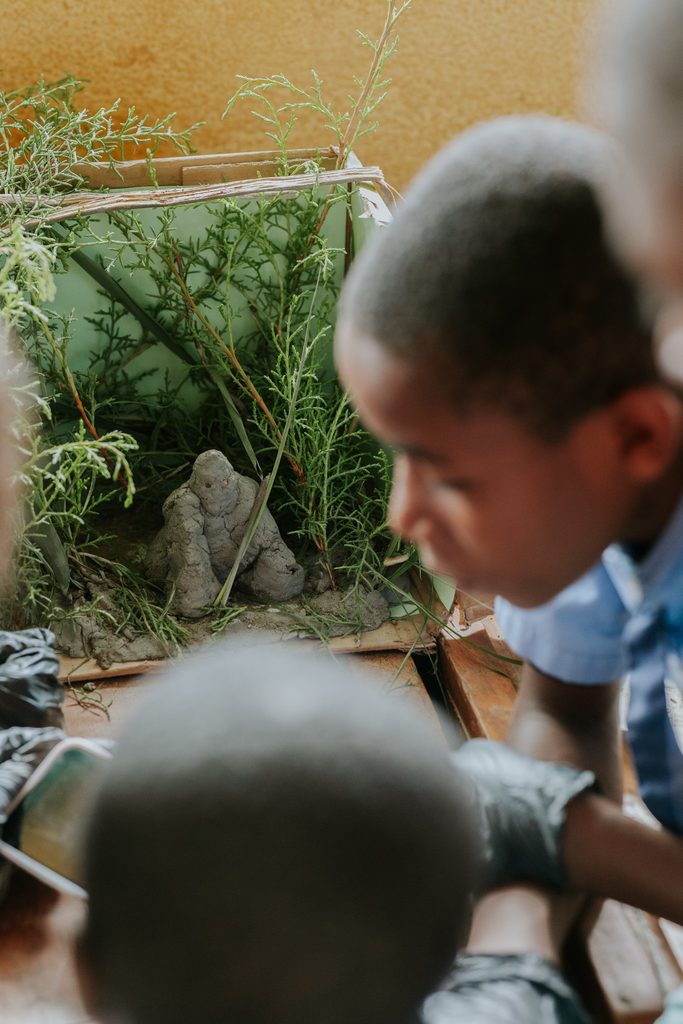
Ownership between states is not the only question. How does an average citizen celebrate a return? Do they know what came back? Do they know it was taken? This is why education has become a core pillar in our work. We do not want to repeat the same practices within Western museology, where the affected communities become an audience for their own heritage. Through our flagship community programming, Ubutabire, we engaged young and elderly participants across four districts of Rwanda on restitution, storytelling and 3D scanning. At the end of each workshop participants used clay and stop-motion animation to create stories, testimonies, and pledges about restitution and dealing with distant heritage, gathered into collaborative series. None of this necessarily required a foreign institution’s permission. The political process moves at the speed states allow and are capable of. Building, however, comes on our terms.
If I imagine 2070, I see objects coming home to celebrate rather than to ceremonies arranged by the government. I see returns facilitated by creatives, teachers, students, farmers, designers, the people who will want to live alongside these pieces of art and heritage. I see objects placed where anyone can view them, as public sculpture, expanding public art and memory across the African continent. Our ancestors built tools to solve the problems of their moment. We are doing the same with today’s available tools and we are doing it on their behalf. What was taken was taken from them first and we will keep asking for it back.
A Way Over
As Media 2070 continues to collaboratively define media reparations, technology must be considered as part of a larger analysis of narrative and material harm, as well as a site for repair and possibility. At Media 2070, the belief is that the people and things best positioned to respond to the crises above are already available to us.
Milele Museum demonstrates that technology is inherent to Black and diasporic culture through our oral traditions, ceremonies, and knowledge of the natural world. Specifically through artifacts, they present creative approaches to cultural repair that allow us to engage with technology through our historic relationship to it. While we make plans to reclaim art, land and wealth stolen through colonization, it is also urgent and necessary to re(member) that we can create realities inside of this one. We can build places inside of places, cultures within cultures where repair can strengthen and build its muscle. We can engage with our own forms of technology to build places where we can nurture what was stolen, even if we can’t yet hold what was lost physically. And that reimagination of place in and of itself is a form of (quantum) technology.
If we look to Black communities we’ll find that we know how to integrate technology in ways that build worlds rather than destroying them. This exploration into reparative technology is an affirmation that repair thrives when Black people own and control our narratives and the technologies that help hold, create and share them from ideation through distribution. Art and media as technology has the potential to help access repair through alternative avenues than those currently available to us. As we consider the avenues for repair in the world of technology, – art and culture workers can guide us towards new and old strategies.
If you appreciate BBG's work, please support us with a contribution of whatever you can afford.
Support our stories