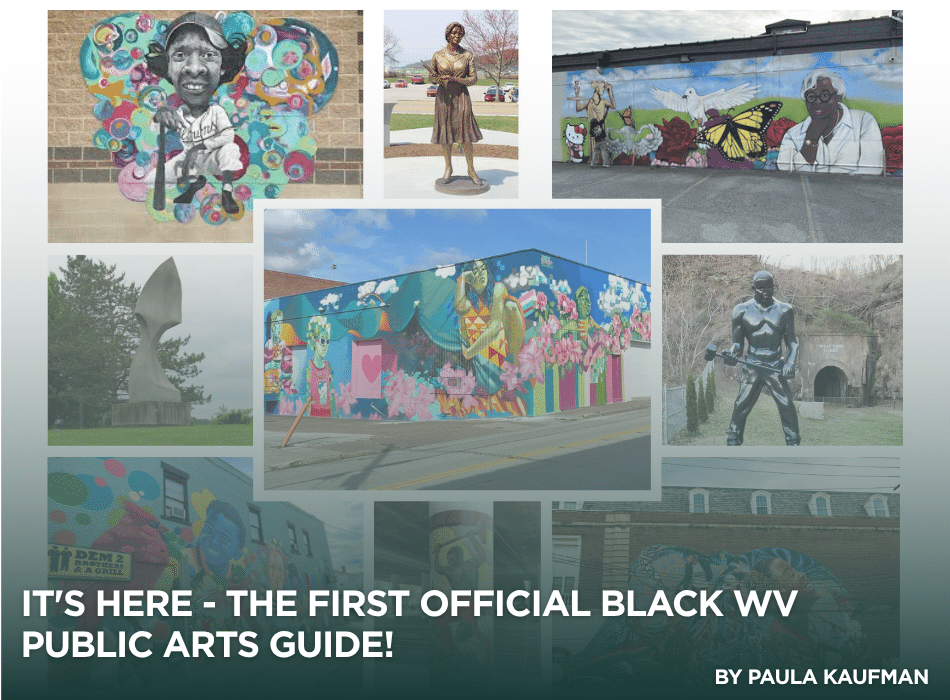
It’s Here – The First Official Black WV Public Arts Guide!
Welcome to the first official guide for Black murals, monuments and sculptures in WV. Unlike other types of art, public art is fully free. Accessible. No ticket needed. No entry fee. It is available to see any time of day and night. Of the people, for the people and often by the people. Vivacious. Colorful. Expressive. Alive.
By Paula Kaufman
Welcome to the first official guide for Black murals, monuments and sculptures in WV. Unlike other types of art, public art is fully free. Accessible. No ticket needed. No entry fee. It is available to see any time of day and night. Of the people, for the people and often by the people. Vivacious. Colorful. Expressive. Alive.
As you read, murals in The Mountain State are in progress. Brush stroke by stroke. Art is protean. Alive. If you come across a mural centering the Black experience not in this guide, let us know! Every piece of public Black art is an act of witnessing. A recovering. Since Black history has been (and is now) intentionally buried, public art featuring Black faces is a constant process of excavation.
Collective Makership
Something differentiating murals from other art forms is their process. They are grassroots, often community-driven and collectively painted. Murals are a three-way communication between painter, subject and the public. A community dialogue.
Take the The Past to Our Future mural on the Ebenezer Day Care Center in Huntington, for instance. Children there played a large role in its creation. Or how about the Dr. Martin Luther King Jr., mural in Charleston. The latter has a background made from 1,325 community self-portraits. Amazing, right?
The specialness of murals is their spontaneity. A mural can be painted and taken down overnight (though they typically can take months and even years of planning.) But the reality remains: the truth that history can be erased as easily as spoken. Murals are an effective way to shift public discourse.
Monuments on the other hand are most often permanent. Not going anywhere. This is a comfort. The downside is that they are much more expensive and harder to get permission to erect. As such, it can be difficult to get donors and institutions on board.
Slowly but surely, from Huntington to Beckley, city governments are investing in Black monuments.
Stand and take a picture with a guitar-strumming Bill Withers in Beckley. His songs like Ain’t No Sunshine, Lean on Me, Just the Two of Us and Lovely Day are tunes of our time. Globally heralded. Iconic. He was sculpted by renowned Black WV sculptor Frederick Hightower.
Or, go over to West Virginia State University and see the monument of Katherine Johnson. Featured in the blockbuster hit Hidden Figures, Johnson’s complex math equations sent men to space.
Music, math, sports and beyond–Black contributions have contributed mightily to West Virginia. Appreciate basketball? Travel to Huntington on the Marshall University Campus to see a larger than life sculpture of Hal Greer (also by Hightower) of the first Black athlete to play college basketball in West Virginia, breaking the color barrier in collegiate sports.
Want even more historical figures? Try the monument to Carter G. Woodson, the father of Black History Month, also in Huntington.
In Charleston, stroll the iconic and breath-taking Capitol Grounds and find the memorial to Booker T. Washington.
Public art in West Virginia continues to expand, with new murals constantly in progress. They widen representation and present a more truthful telling of history. These works reclaim space and story, offering something essential: visibility.
Stepping Up
Some of West Virginia’s largest cities are stepping up to acknowledge Black past and present but others such as Wheeling, Martinsburg, Weirton, Fairmont and Clarksburg have work to do. But Black history is not reserved for cities alone: it can be found in each hamlet.
Remember this: your advocacy matters. Your push to create a mural in a public space, or get a new statue erected could be what it takes to turn dream into reality. Start a petition, organize with friends and community to get art put into the world. We all can make a difference. Read, learn, then advocate for more hidden figures to be seen.
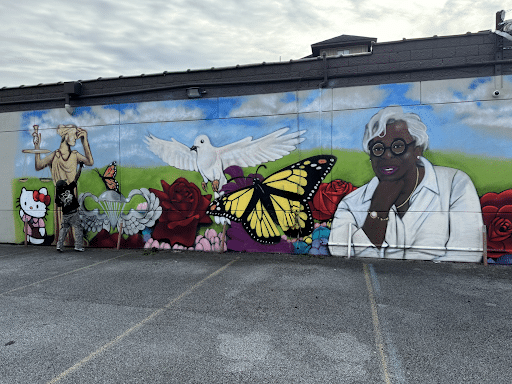
Murals are acts of reclamation—of agency, presence, and voice. They show the world that Appalachia is Black, too. That every inch of West Virginia has been shaped by Black influence, skill, talent, time, and care.
Public art communicates who is worthy of remembrance. Celebration. Too often, predominantly pale and male faces fill the public art landscape. But that’s changing and expanding. Finally.
Come along for the journey—from Charleston to Huntington, Fairmont to Morgantown and beyond—and experience the art, culture, and history of Black West Virginia.
Enjoy.
And let us know if you find another mural or sculpture. We’d love to hear about it!
WV Black Public Art Guide
Let us know if you find another mural or sculpture. We’d love to hear about it! Tag us on Instagram @blackbygodwv for any art you have created.
If you appreciate BBG's work, please support us with a contribution of whatever you can afford.
Support our stories
Related Articles
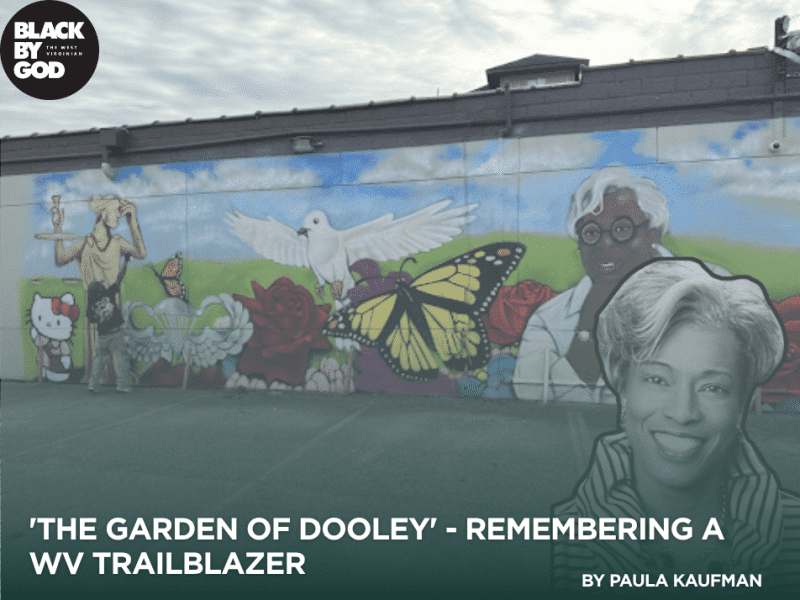
‘The Garden of Dooley’ – Remembering a WV Trailblazer
Explore the ‘Garden of Dooley’ mural by Tat Plug at Charleston’s YWCA, honoring civil rights leader and attorney Katherine ‘Kitty’ Dooley.
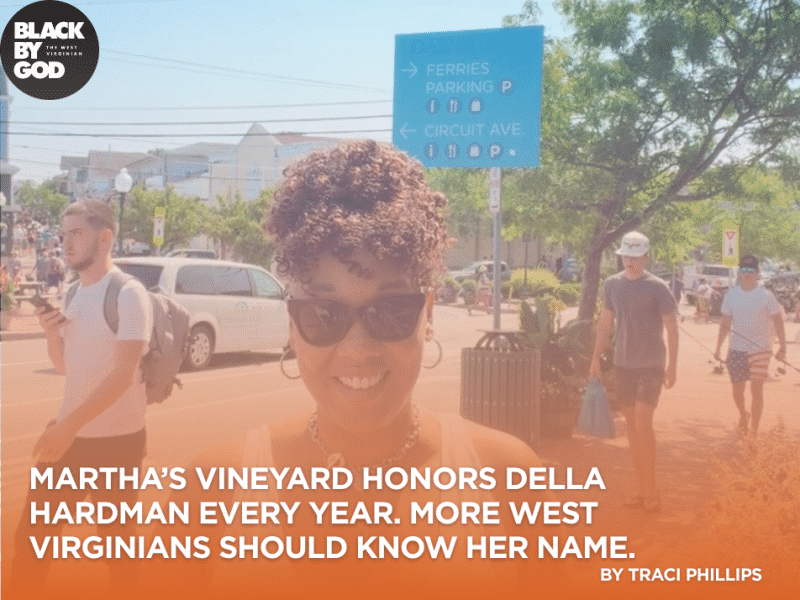
Martha’s Vineyard Honors Della Hardman Every Year. More West Virginians Should Know Her Name.
Charleston-born artist and educator Della Hardman taught at West Virginia State before building an enduring cultural legacy in Oak Bluffs.
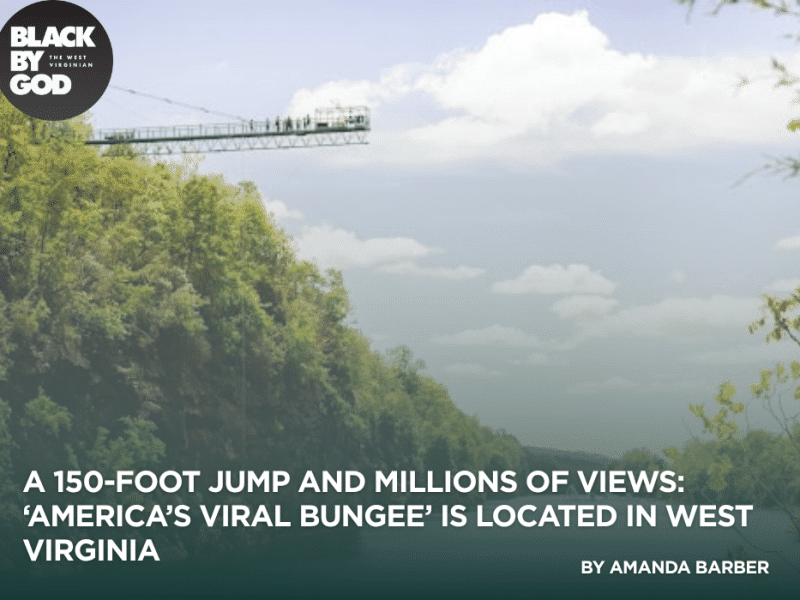
A 150-foot jump and millions of views: ‘America’s Viral Bungee’ is located in West Virginia
Dubbed ‘America’s Viral Bungee,’ The Great Bungee Company in Harpers Ferry offers a 150-foot drop that turns regional tourism into viral content creation.