It’s Here – The First Official Black WV Public Arts Guide!
Welcome to the first official guide for Black murals, monuments and sculptures in WV. Unlike other types of art, public art is fully free. Accessible. No ticket needed. No entry fee. It is available to see any time of day and night. Of the people, for the people and often by the people. Vivacious. Colorful. Expressive. Alive.
By Paula Kaufman
WV Black Public Art Guide
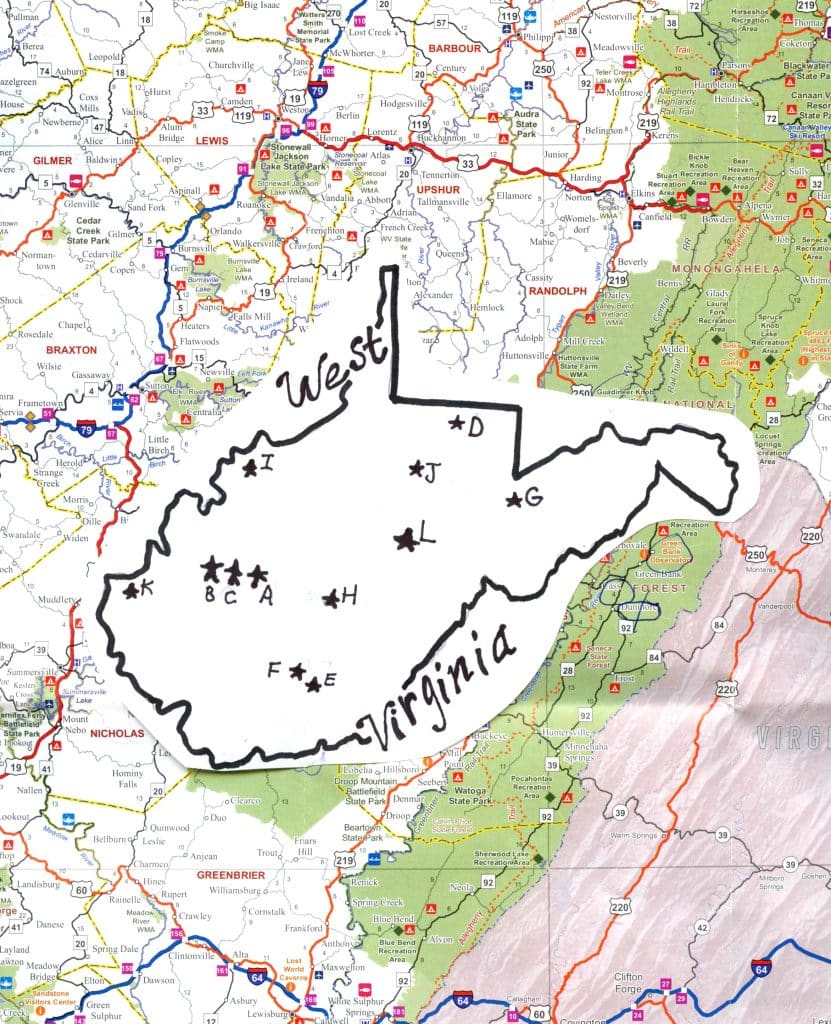
Location Key:
| A – Charleston | E – Talcott | I – Parkersburg |
| B – Institute | F – Beckley | J – Fairmont |
| C – South Charleston | G – Thomas | K – Huntington |
| D – Morgantown | H – Malden | L – Buckhannon |
We’ll bring the best from BBG right to your inbox. You can easily unsubscribe at any time.
Sign Up for our Newsletters!
A – Charleston:
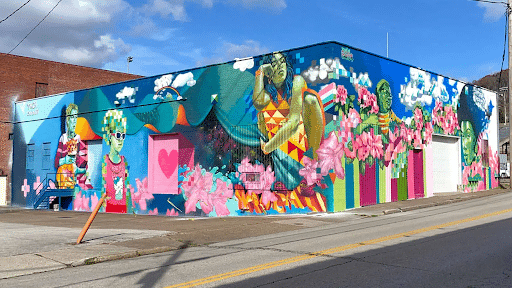
- “The Watcher, The Wonder and the Wise” Mural: Zulu Painter, a West Virginia-native, created this mural and has said it is, “dedicated to all the Feminine energy out there nurturing, protecting and guiding.”
- Address: 517 Elizabeth St.
- Artist: Zulu Painter
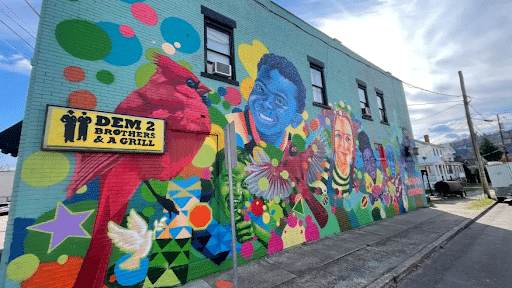
- “Cultivate Kindness” Mural: Charleston has made more conscience efforts in recent years to spotlight Black area artists such as Zulu Painter, Black subjects and history, to show the true diversity represented in the state’s capital city.
- Address: 167 Delaware St.
- Artist: Zulu Painter
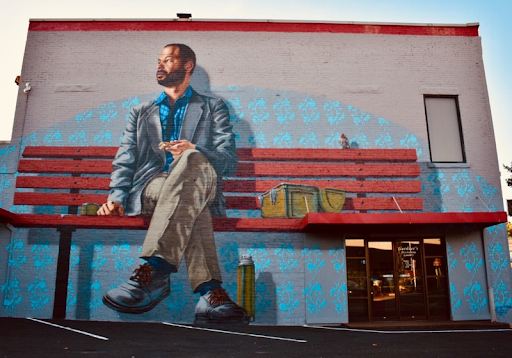
- “Dreamer” Mural: One of the most striking and prominent murals in Charleston, it shows a Black man, lunchbox open, sandwich in hand, larger than life, about to eat during a lunch break, with a small bird looking on. It shows that the mundane and quotidian is Black life, culture, and history, too. That the Black experience is current and happening now, all around us.
- Address: 101 Washington St. W.
- Artist: Dan Toro
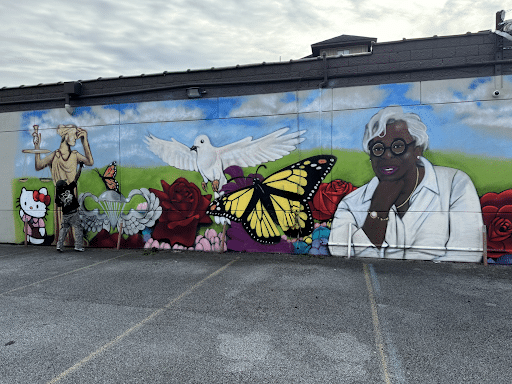
- “The Garden of Dooley” Mural: Celebrating the life of WV lawyer and community leader and advocate Katherine “Kitty” Dooley. She was the first female cadet to be awarded the Army Airborne Parachute Badge while at Marshall University and used the rest of her life to break barriers in law and leadership, and pave the way for others to do the same.
- Address: 412 Elizabeth St.
- Artist: Tyrone Scott (tatplug304)
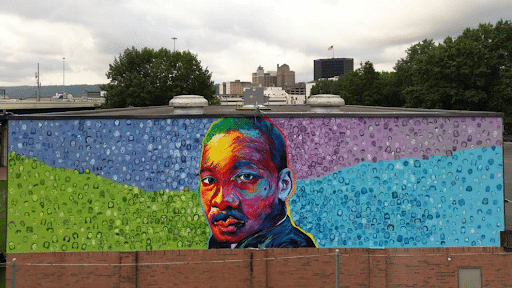
- “Dr. Martin Luther King Jr.” Mural: When traveling, King made a Charleston stop in 1960 at The First Baptist church, saying “we have allowed our mentality to outrun our morality” and our “technology to outrun our theology.” This mural reflects on his wisdom and dream, always a progress in becoming.
- Address: Martin Luther King Jr. Community Center, 314 Donnally St
- Artist: Jeff Pierson and community members; Charleston Office of Public Art
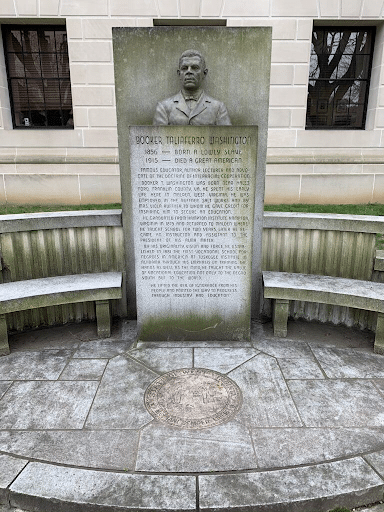
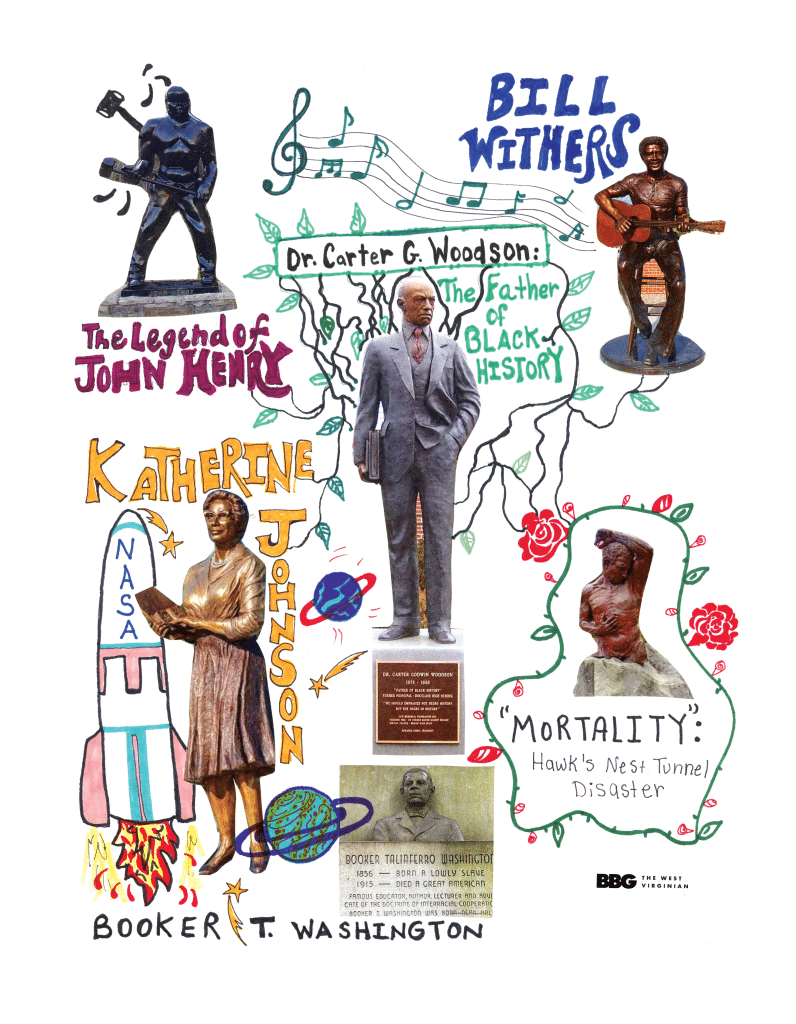
- “Booker Taliaferro Washington Monument”: There’s one black person honored on the grounds of the WV State Capitol. That’s Booker T. Washington. Pay him some respect and read up on his life. While some paint him as a direct contrast to W.E.B Dubois, this is simplistic; both their views together worked to support Black liberation, education and independence in America. Both mattered.
- Address: 1900 Kanawha Blvd W (at WV State Capitol Complex, outside Building 1)
- Artist: William D. Hopen
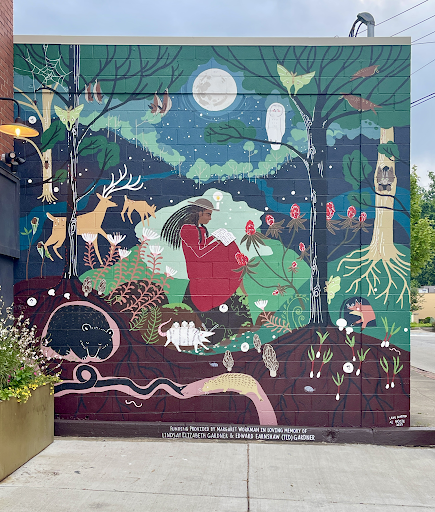
- “Sprouts”, in memory of Lindsay Gardner & Edward (Ted) Gardner Mural. The Lost Moon Holler Mural features a young woman named Mattie reading surrounded by Appalachian flora and fauna such as a black bear, fox, rhododendrons, opossum, ramps, deer, bats, owls, fireflies and a luna moth, showing how reading can be a form of light.
- Address: 427 Washington St. W.
- Artist: Lane Martin and Al Nocie
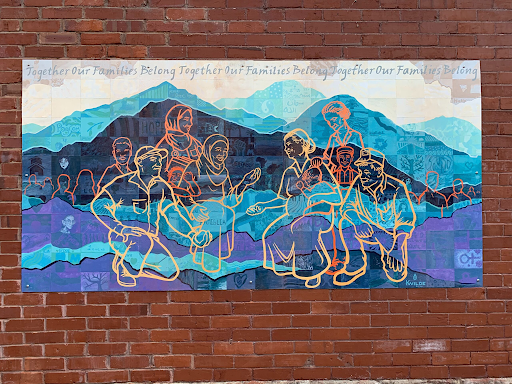
- “We Belong Together” Mural: Commissioned by the WV American Civil Liberties Union and the WV Interfaith Refugee Ministry, this piece shows the disparate backgrounds of West Virginians, drawn from across the globe, all bringing our unique stories, experiences and vivacity to the Mountain State, a place we can all call home.
- Address: 904 Quarrier St.
- Artist: Keith Wilde and Charleston community
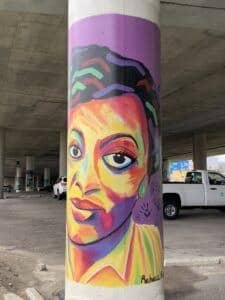
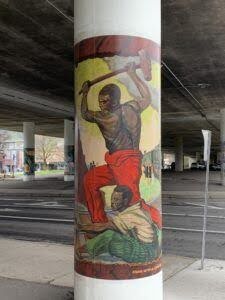
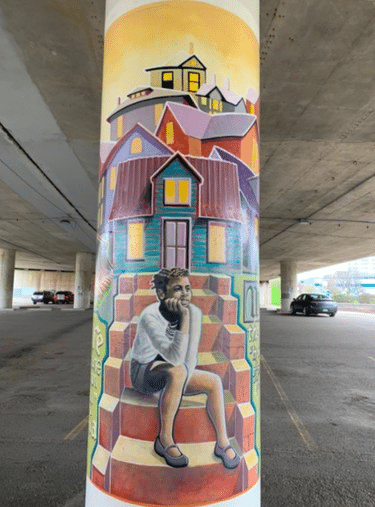
“Gallery 64 piers”: Mary C. Snow; John Henry; Gone But Not Forgotten (Triangle District).
Snow was a pioneering educator and Kanawha County’s first Black principal after integration. Henry is one of Appalachia’s most enduring legends of the strength of humans against machines—with humans winning. The Triangle District was a vivacious, segregated Black residential and business hub on the East End from the early 1900’s to the mid-1950’s bordered by the Elk River, Slack St. and Washington St. It was brimming with Black-owned businesses, homes and churches and was demolished for urban “renewal” in the 1960’s-70’s.
- Address: Beneath the I-64 bridge
- Artist: Artist of John Henry: Reaford Walker; Artist of Mary C. Snow: Rebecca Recco; Artist of Gone But Not Forgotten: Molly Musk
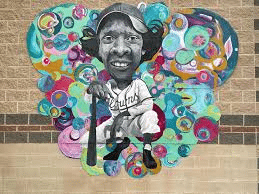
- “Toni Stone” Mural: Stone was born in Bluefield. In 1953 she became the first woman to play as a regular on an American major-level professional baseball team. She was called “one of the best players you’ve never heard of.”
- Address: GoMart Ballpark, behind home plate, 601 Morris St. (field open for ball games and events)
- Artist: Jeff Pierson and Vasilia Scouras (City of Charleston Office of Public Art)
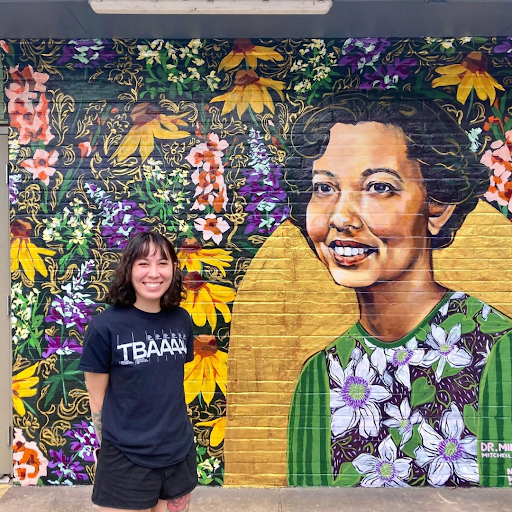
- “Dr. Mildred Bateman” mural beside artist Nichole Westfall. Bateman was a pioneering psychiatrist and public health leader. She served as Commissioner of the WV Dept of Mental Health and advocated for humane treatment for mental illness, deinstitutionalization and greater access to healthcare equality.
- Address: Washington St. West, West Side
- Artist: Nicole Westfall
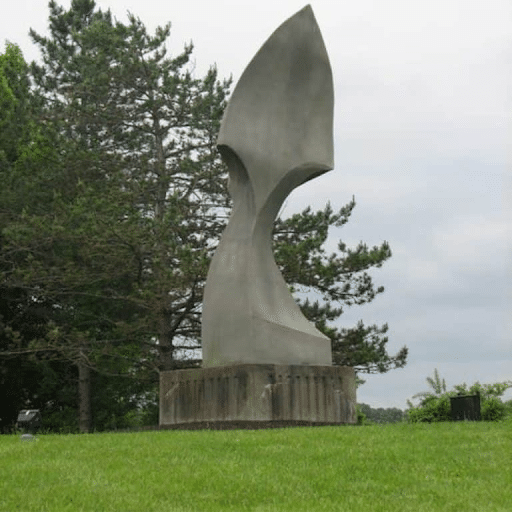
- “Sound and Beyond”: Dr. Cubert Smith created this piece by the International Yeager Airport to show that even a boy born Black in the 1930s with few resources in small-town WV found a way to make sculptures defying the skies.
- Address: WV International Yeager Airport (on the drive up, right before it)
- Artist: Dr. Cubert Smith
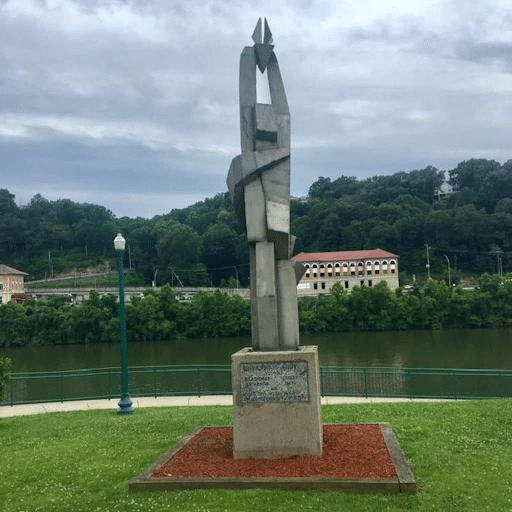
- “Unity”: Looking out over the Kanawha River this sculpture is an international collaboration with a Russian sculptor and West Virginian Dr. Cubert Smith, showing the way Black artists in Appalachia challenged expectations and borders, creating far-reaching peaceful collaborations. Art can be a tool for diplomacy and to build bridges. Don’t forget it. Art is power.
- Address: Haddad Riverfront Park
- Artist: Dr. Cubert Smith
B – Institute:
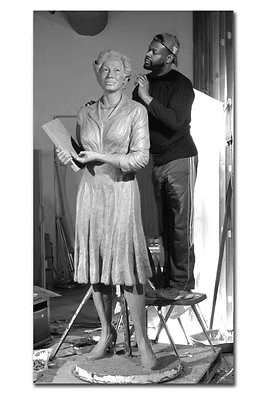
- “Katherine Johnson” Monument. Johnson was a pioneering math prodigy for NASA in the 1950’s and 60’s. Her brilliant calculations made the first space missions possible, helping win the space race. She was nicknamed “the human computer.” Art is memory.
- Address: West Virginia State University, 5000 Fairlawn Ave.
- Artist: Frederick Hightower
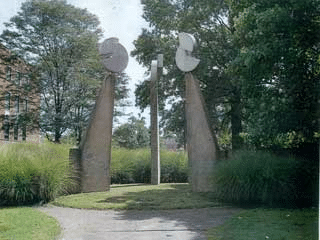
- “La Vista” sculpture: made by former scholar and West Virginia State University Professor Dr. Cubert Smith whose iconic steel and bronze pieces dot the greater Kanawha Valley.
- Address: Drain Jordan Library, WVSU
- Artist: Dr. Cubert Smith
C – South Charleston:
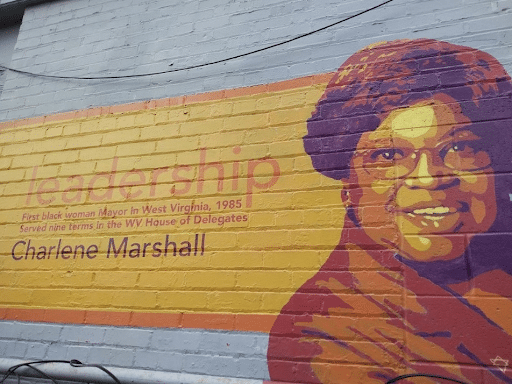
- “Charlene Marshall” mural. Marshall was the first African American mayor in WV. She was told a Black woman could never win. She ran in Morgantown and won, anyway. She was also in the WV U.S. House of Representatives for over a decade. She continues to advocate for equality.
- Address: Milan Puskar Health Right, 341 Spruce St. Morgantown
- Artist: Eve Faulkes with WVU Students and Community Volunteers
D – Morgantown:
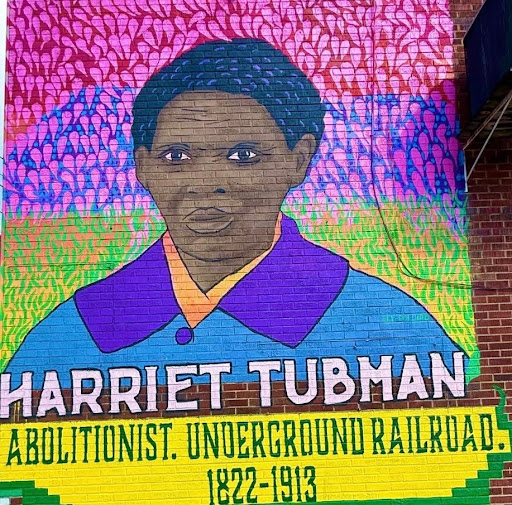
- “Harriet Tubman.” On his Instagram, artist Elijah Pollard writes about his Morgantown Harriet Tubman mural saying, “now more than ever it’s important to remember the real heroes of history and what they stand for while white-washing the past is at an all-time high.”
- Address: 123 Pleasant St.
- Artist: Elijah Pollard
E – Talcott:
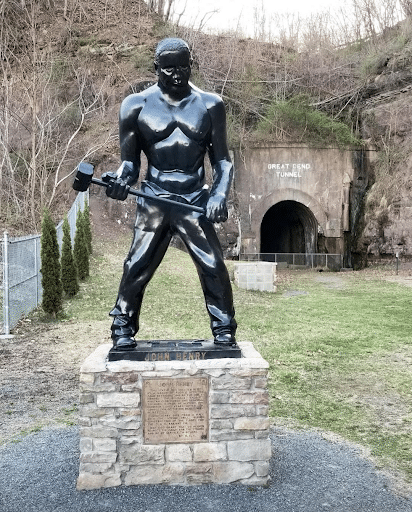
- “John Henry” monument: This pays homage to the Appalachian legend of John Henry “the steel driving man” whose might and brawn beat even a stream drill.
- Address: John Henry Historical Park
- Artist: Charles O. Cooper
F – Beckley:
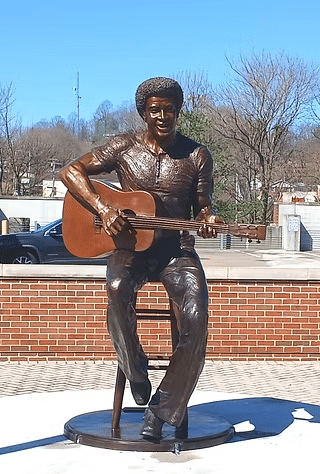
- “Bill Withers” monument: Withers represents West Virginia’s contribution to global music. Perhaps our most famous musical legend, he was the father of songs like Ain’t No Sunshine; Lean on Me; Lovely Day and Just the Two of Us.
- Address: 501 Neville St, Bill Withers Plaza
- Artist: Frederick Hightower
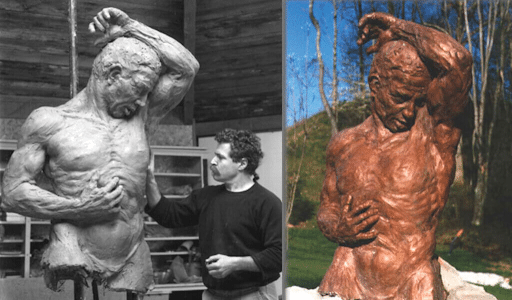
- “Mortality”: Honors miners who died horrifically from silicosis in the Hawk’s Nest Tunnel Disaster–one of the worst industrial tragedies in U.S. history. Most were Black. Men were denied masks or breathing equipment and the company chose not to “wet drill,” a process that removes dust. Some were forced to work at gunpoint. Over 1,000 died. Art ensures the deceased are never forgotten.
- Address: Tamarack, One Tamarack Park
- Artist: Bill Hopen
G – Thomas:
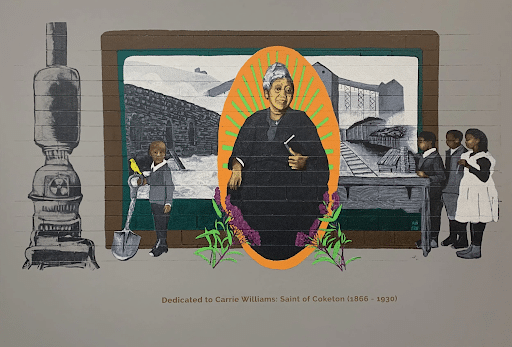
- “Carrie Williams” mural: Williams was a teacher in segregated Tucker County at the Coketon School near Douglas Falls. Black schools were not open as many months as white ones. Williams resisted and taught for as many months as the white school then sued to be paid and won. She was represented by J.R. Clifford, WV’s first African-American lawyer. This paved the way for the Brown v. Board of Education decision 50 years later.
- Address: Back of Buxton and Landstreet Gallery
- Artist: Ali Printz
H – Malden:
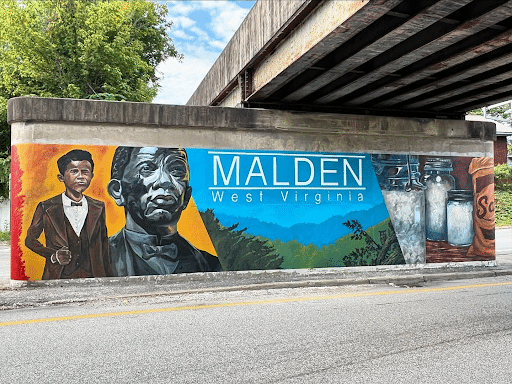
- “Booker T. Washington” Malden mural: Washington was born into bondage in Virginia. When free, Washington came to Malden as a child where he labored in the salt and coal industry, carrying sacks and fanning furnace flames. He taught himself to read and write, founding the Tuskegee Institute and becoming a globally recognized educator, author and orator.
- Address: Under the railroad tracks that passes over George’s Drive
- Artist: Blake Wheeler
I – Parkersburg:
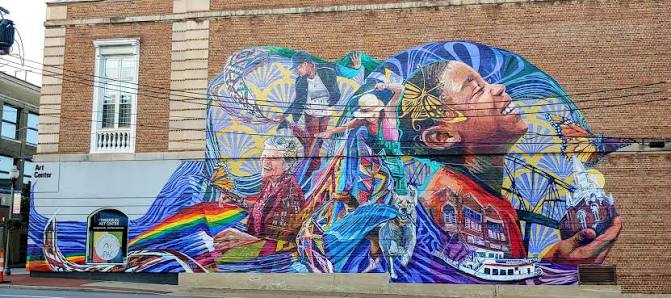
- “Parkersburg Art Center Mural”: A 2500 sq. ft. exterior mural created in a series of three community paint parties and open studio hours with over 200 community participants helping create this mural leading in to Parkersburg’s downtown.
- Address: 725 Market St.
- Artist: Good Space Murals and over 200 community volunteers
J – Fairmont:
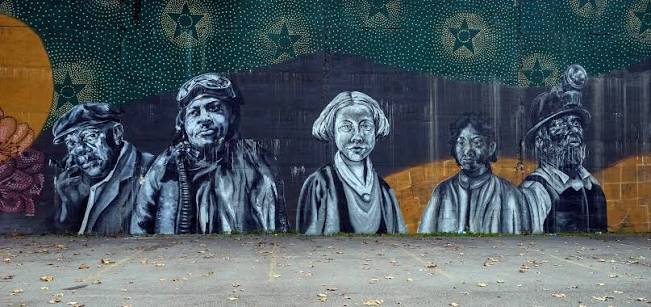
- “Palatine Park Mural”: Depicted are Johnnie Johnson, Rock and Roll Hall of Famer, known for blues, jazz and rock and roll; Col.Goerge S. “Spanky” Roberts, the first Black military pilot from WV and a Tuskegee Airman; Julia Pierpont, who started Memorial Day; and Hattie Wilson, the last woman freed from bondage in WV.
- Address: A retaining wall at Everest Dr.
- Artist: Prof. Joel Dugan and 5 Fairmont students
K – Huntington:
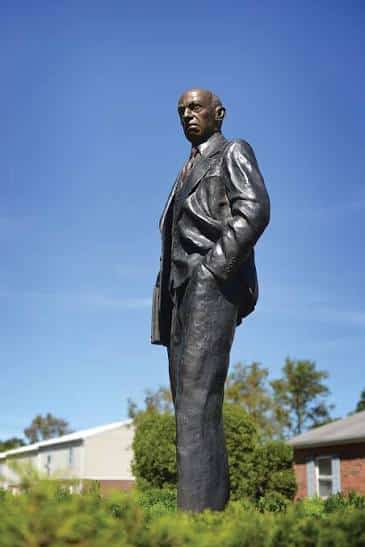
- “Carter G. Woodson” monument: Woodson is considered the “Father of Black History Month.” He changed what counted as history in the United States. Woodson built the field of Black history as a discipline. From scratch. He collected the journals, archives and research that put Black contributions into academia. He expanded what came to be included as history and what became Black history month, permanently enhancing school curriculum and public history.
- Address: 825 Hal Greer Blvd
- Artist: James Lykens
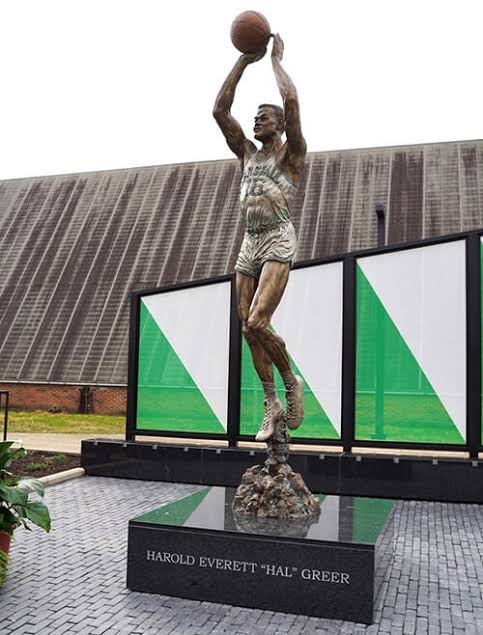
- “Harold Everett “Hal” Greer” Monument: Greer also has his own Boulevard, and rightly so. He was the first Black man to play for a public college in WV. This hometown legend was a 10-time NBA All-Star and scored over 21,000 career points, making him one of the top scorers of his era. He played in over 600 consecutive NBA games showing his consistency and perseverance. He became an ambassador for WV representing what makes us shine.
- Address: corner of 3rd avenue and 18th st. Marshall University campus
- Artist: Frederick Hightower
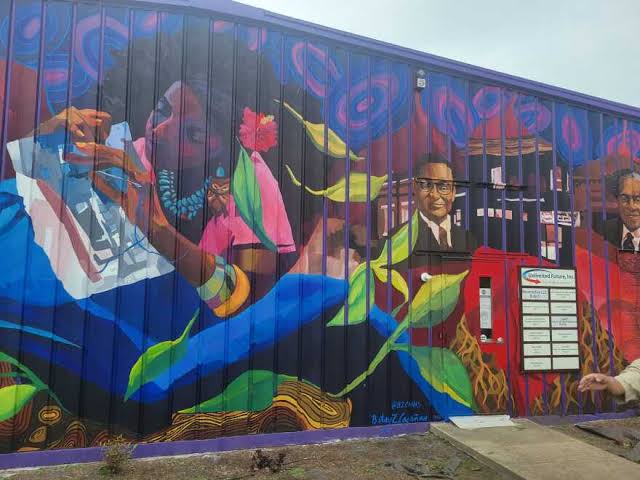
- “Fairfield District Past to Our Future Mural Project #1” : honors the Fairfield District, a vibrant Black hub economically and culturally in the Ohio River Valley and leaders such as Mr. Joe L. Williams Jr. Pastor Samuel R. Moore Marion Elizabeth T. “Bunche” Gray, Michael Thomas and Marion Elizabeth T. “Bunche” Gray.
- Address: Ebenezer Day Care Center, 1660 8th Ave.
- Artist: Ernel Martinez and Ebenezer Day Care Center children
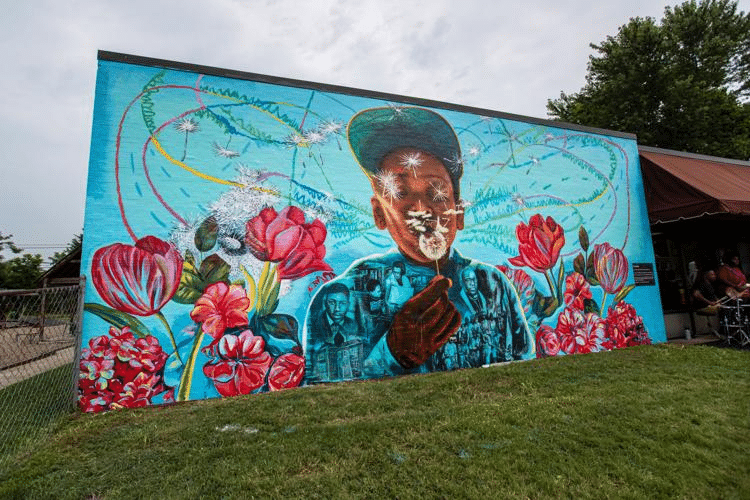
- “Fairfield District Past to Our Future Mural #2:” Drawings from kids at the Ebenezer Day Care Center were incorporated into the mural. Within the boy’s shirt include historical images like Barnett, the area’s first Black Elementary School; Explosive Dynamiks member Lorenzo Batts Jr., Ebenezer United Methodist Church Reverend Idus Jones Jr. and Audrey Farrow McClinton who spent over 25 years working at the Barnett Childcare Center.
- Address: Multicultural Center (Unlimited Future), 1650 8th Ave.
- Artist: Betsy Casañas
L – Buckhannon:
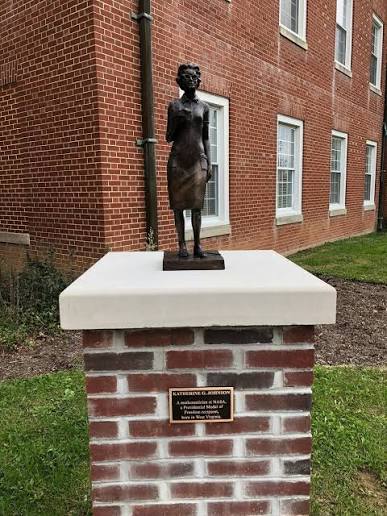
- Miniature “Katherine Johnson” Statue: WV Wesleyan art Professor Ellen Mueller spearheaded this statue. She heard about the movie “Hidden Figures” and made it her mission to correct history by honoring Johnson and find a way to make this memorial a reality. One person can make a difference. What statues do you wish to see that aren’t built yet? Which heroes deserve honoring? Where should their faces go? Their quotes? Who is worth remembering? We get to choose. Public art makes and re-shapes history.
- Address: 59 College Avenue, WV Wesleyan College campus
- Artist: Ellen Mueller and Andrew Thorne
Let us know if you find another mural or sculpture. We’d love to hear about it! Tag us on Instagram @blackbygodwv for any art you have created. Share any black art you find in the contact form below.
If you appreciate BBG's work, please support us with a contribution of whatever you can afford.
Support our stories
Related Articles
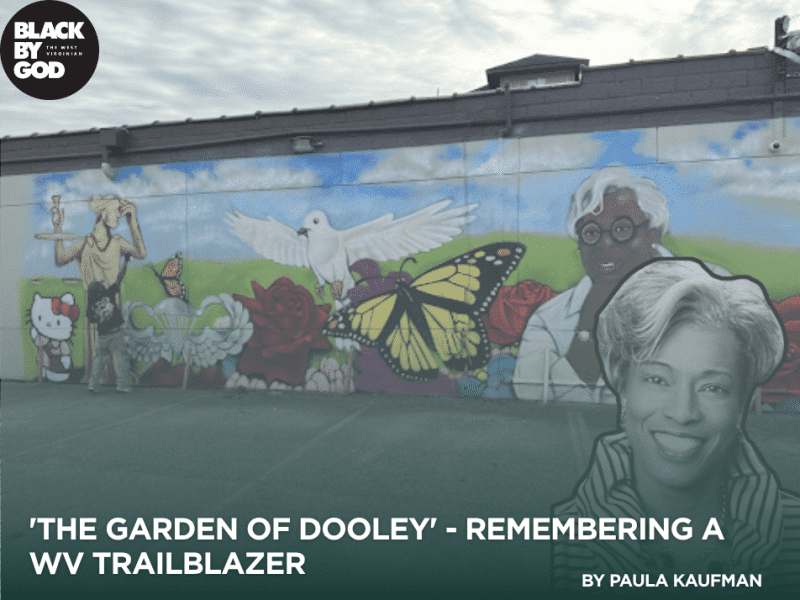
‘The Garden of Dooley’ – Remembering a WV Trailblazer
Explore the ‘Garden of Dooley’ mural by Tat Plug at Charleston’s YWCA, honoring civil rights leader and attorney Katherine ‘Kitty’ Dooley.
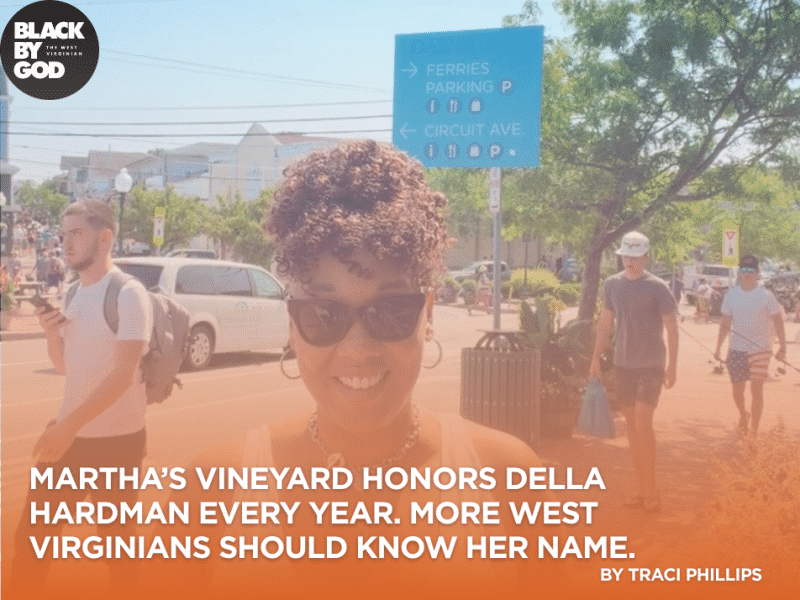
Martha’s Vineyard Honors Della Hardman Every Year. More West Virginians Should Know Her Name.
Charleston-born artist and educator Della Hardman taught at West Virginia State before building an enduring cultural legacy in Oak Bluffs.
A 150-foot jump and millions of views: ‘America’s Viral Bungee’ is located in West Virginia
Dubbed ‘America’s Viral Bungee,’ The Great Bungee Company in Harpers Ferry offers a 150-foot drop that turns regional tourism into viral content creation.