Youth Voices Rising: Myana Mosley and Antoine Booker Look Beyond West Virginia Stereotypes
This story is part of Youth Voices Rising, a Black By God narrative-change project supported by The Greater Kanawha Valley Foundation and produced in partnership with the Norman Jordan African American Arts and Heritage Academy at West Virginia State University.
By Black By God Youth Voices Rising
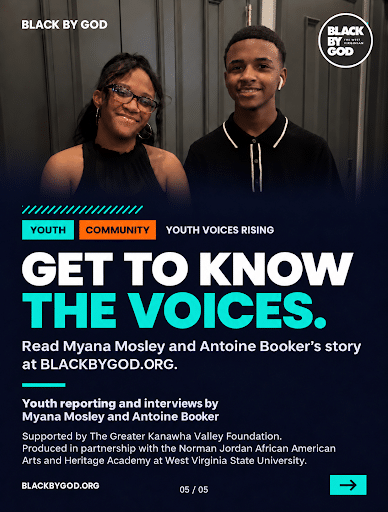
Youth reporting and interviews by Myana Mosley and Antoine Booker
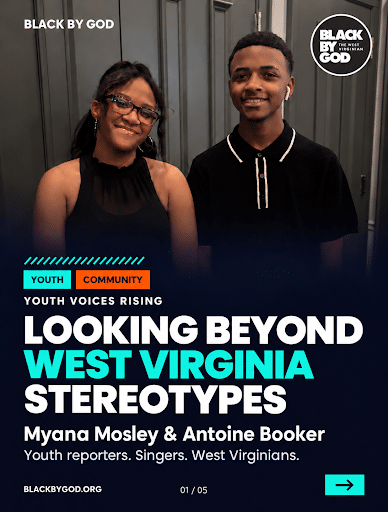
Myana Mosley and Antoine Booker know something about the talent growing up in West Virginia. Both have musical talents, including singing, that they shared during the camp showcase at the Norman Jordan African American Arts and Heritage Academy.
During Black By God’s Youth Voices Rising journalism workshop, they brought another skill into the spotlight: interviewing. Taking turns as reporter and interviewee, the two teens explored what makes their communities meaningful and what they wish other people could see.
Mosley, a student at South Charleston High School, interviewed Booker, a student at George Washington High School in Charleston. When asked what people don’t notice about his community, Booker pointed to the young people around him.
We’ll bring the best from BBG right to your inbox. You can easily unsubscribe at any time.
Sign Up for our Newsletters!
He described a community of “loving and, you know, intelligent, talented young African American students and campers and teens like myself.”
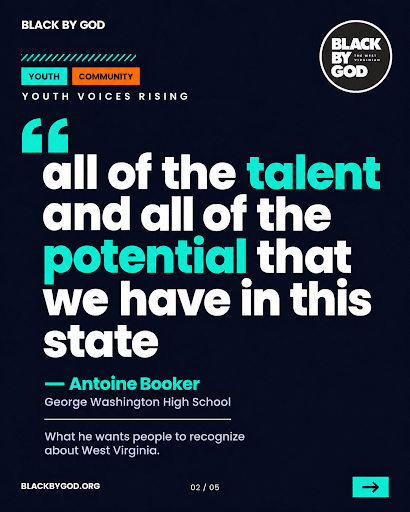
Booker said he wants people to recognize “all of the talent and all of the potential that we have in this state” and for that potential not to be overlooked.
Antoine Booker said he want people to recognize “all of the talent and all of the potential that we have in this state.”
Their own showcase performances offered an example of that talent. Alongside learning to ask questions and record interviews, Mosley and Booker were sharing their voices through music. The young people Booker wanted others to notice included the students gathered around him—and the two teens conducting the interview.
For Mosley, the reporting assignment also became an opportunity to reflect on how her community is perceived.
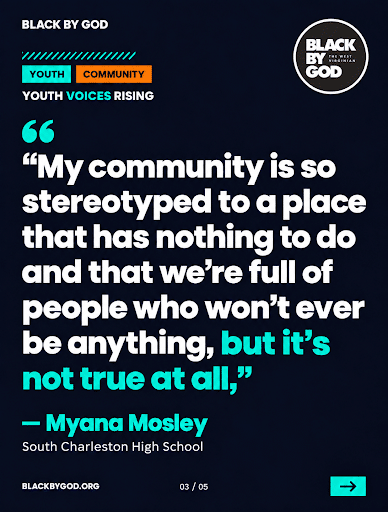
“My community is so stereotyped to a place that has nothing to do and that we’re full of people who won’t ever be anything, but it’s not true at all,” Mosley wrote.
Then they switched roles, with Booker asking the questions. Mosley described her community as small, a place where everyone knows each other. Seeing people come together, she said, makes her proud of where she is from.
“My community is so stereotyped to a place that has nothing to do and that we’re full of people who won’t ever be anything, but it’s not true at all.”
– Myana Mosley
Her answer brought the conversation to belonging: the relationships and shared moments that help a place feel like home. Together, their interviews offered a view of West Virginia shaped by young people who know its communities firsthand.
The two reels also show the teens practicing the work of journalism—asking questions, listening and giving someone else room to explain their experience. Each had the opportunity to tell a story and help another young person tell theirs.
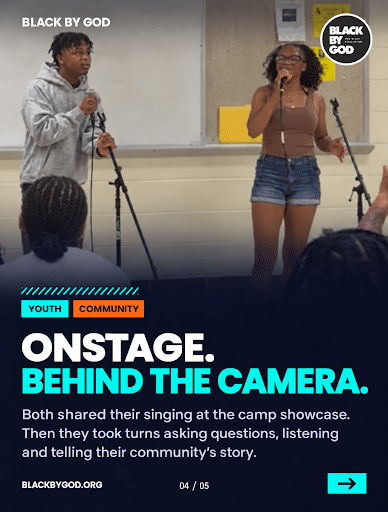
Onstage, they shared their voices. Behind the camera, they helped bring each other’s perspectives forward. Both experiences gave audiences a chance to see the talent and potential Booker hopes more people will recognize in West Virginia.
If you appreciate BBG's work, please support us with a contribution of whatever you can afford.
Support our stories
Related Articles
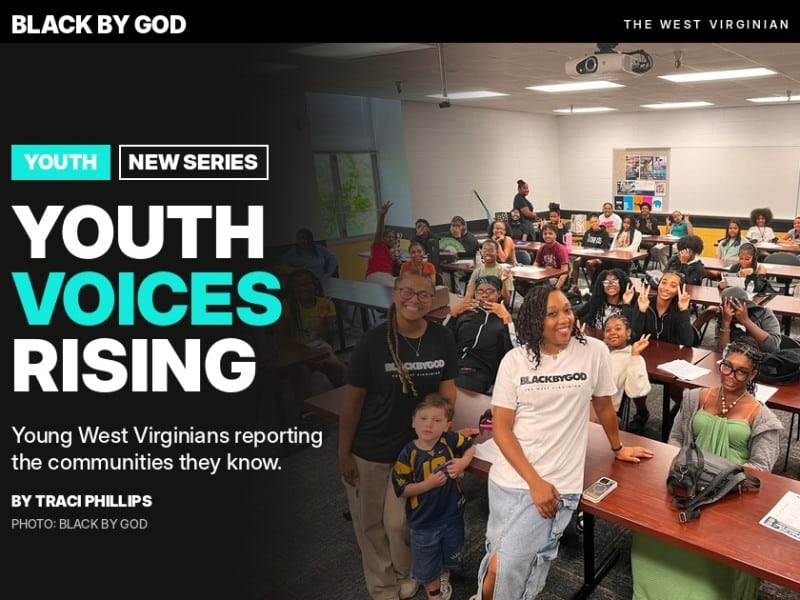
Youth Voices Rising: Black By God Helping Amplify Youth Voices in West Virginia
This October, during National Arts and Humanities Month, Black By God: The West Virginian is launching Youth Voices Rising, a series of student articles, interviews and videos that gives audiences a view of West Virginia through young people’s eyes.
