Mary Barnes’ fight to keep land inherited from her late white husband incited a Black farm movement that lasted for decades
Black By God is reporting on how Black farmers in West Virginia are rebuilding agricultural systems despite barriers to land, policy, and capital—highlighting what’s working, who’s leading, and how communities are adapting.
In this excerpted passage from our article Black Farmers in West Virginia Nearly Disappeared (August 24, 2026) we delve into the bravery of Mary Barnes and how Black farmers in West Virginia received some overdue support in the years following Emancipation. This is the third installment of a five-part series.
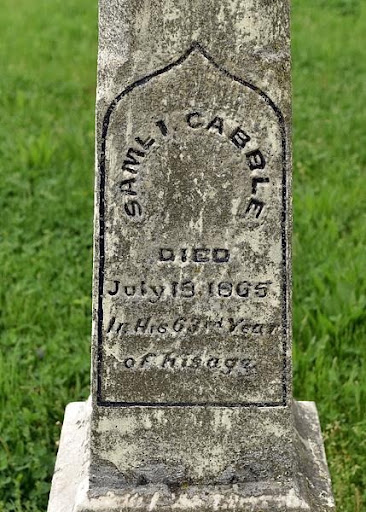
Around 1840, Samuel Cabell purchased and married an enslaved woman named Mary Barnes to work his farm and salt operation near what is now Institute, West Virginia. Over the next two decades, Barnes gave birth to 13 of Cabell’s children. Before his death in 1865, Cabell emancipated Barnes and their surviving children and legally acknowledged each of their births—an extraordinary act at a time when interracial marriage was illegal and Black families had few legal protections.
When Cabell was murdered later that year, Barnes faced a choice few formerly enslaved women ever had the opportunity to make. She fought for the land. Barnes navigated the probate process, petitioned Kanawha County to recognize herself and her children as Cabell’s legal heirs and secured ownership of the property left to them. She took the Cabell surname and ensured her children inherited land that many Black families were denied the chance to own.
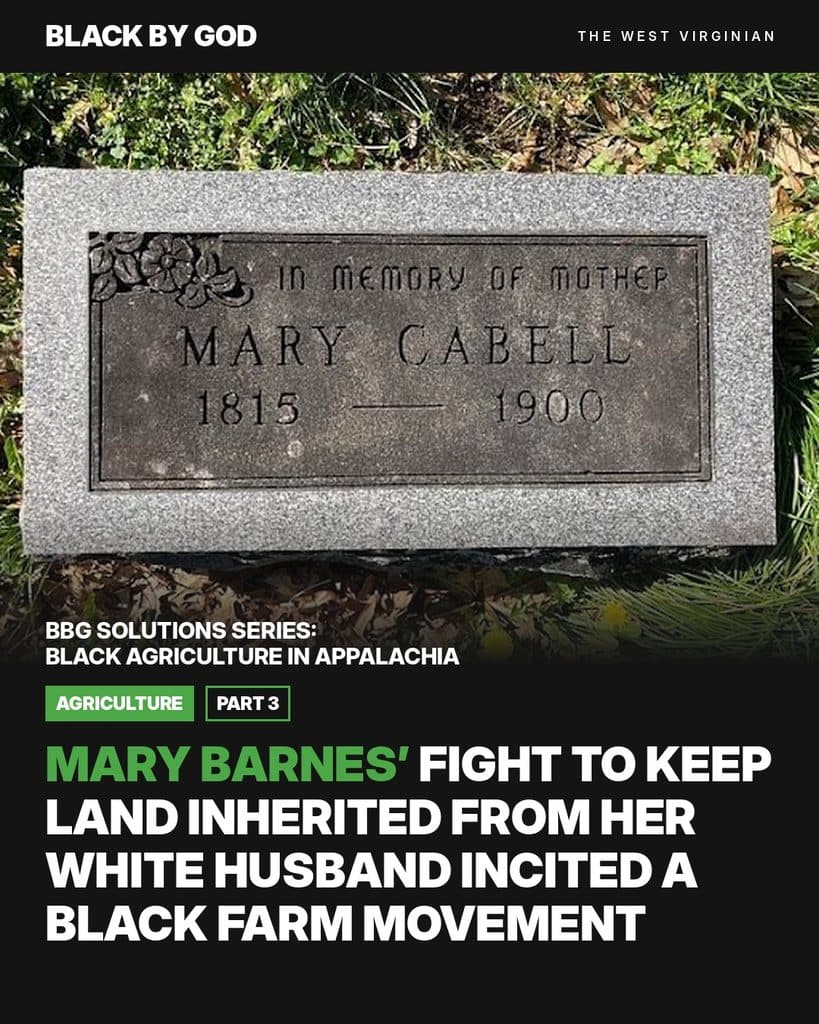
That decision changed West Virginia history. In 1891, Barnes’ daughter, Mary Cabell, sold 30 acres of the family’s land to the state for $2,250 to establish the West Virginia Colored Institute, now West Virginia State University, one of the nation’s 1890 land-grant HBCUs. More than a century later, much of the university still stands on land that Barnes fought to preserve. Her story became part of something much larger.
Around 1840, Samuel Cabell purchased and married an enslaved woman named Mary Barnes to work his farm and salt operation near what is now Institute, West Virginia.
Building more than farms
When the West Virginia Colored Institute opened in 1891, its mission extended beyond literacy. Like Tuskegee, it taught agriculture, trades and self-sufficiency, preparing Black West Virginians to build stable lives on land they could finally call their own.
That philosophy spread beyond the classroom. Country Life movement gatherings brought Black farm families together in communities such as Johnsontown to share knowledge, purchase supplies cooperatively and strengthen local agriculture. Long before the language of food systems and cooperative economics became common, Black farmers were building networks rooted in mutual support.
The university also became home to another remarkable figure. From 1920 to 1922, Carter G. Woodson served as dean of what was then West Virginia Collegiate Institute. A few years later, he founded Negro History Week, the precursor to Black History Month. That one institution—built on land preserved by Mary Barnes’ family—helped shape the man who insisted Black history deserved to be documented and remembered.
Agriculture also became a pathway to Black entrepreneurship. In 1883, Charles H. James and his brothers began as backpack peddlers traveling the southern West Virginia coalfields, trading goods for eggs, produce and whatever families could spare. Their father, Francis James, had been a free Black man in Ohio who helped organize part of the Underground Railroad before settling in Malden, where he became one of West Virginia’s first ordained Black ministers and public school teachers.
What began with a backpack and a mule cart grew into C.H. James & Co., one of the nation’s oldest Black-owned family businesses. Under Charles H. James III, the company evolved into a holding company valued at more than $100 million, earning recognition from Black Enterprise. It stands as one of America’s longest-running Black business dynasties—and its roots trace back to the coalfields, farms and Black communities of West Virginia.
Land was not only preserved by families. It was also sustained through institutions created to serve Black communities that segregation had largely excluded from public resources. At Camp Washington-Carver in Clifftop, West Virginia’s 4-H camp for Black youth, generations learned to plant gardens, preserve food and raise livestock. Agricultural knowledge wasn’t simply passed from parent to child. It was reinforced through community, education and tradition.
By the early twentieth century, Black West Virginians had built more than farms.They had built families rooted in the land. Schools that taught self-sufficiency. Businesses that created generational wealth. Churches, camps and community institutions that carried agricultural knowledge from one generation to the next. The foundation was strong, but unfortunately, it would not remain untouched.

If you appreciate BBG's work, please support us with a contribution of whatever you can afford.
Support our stories
Related Articles
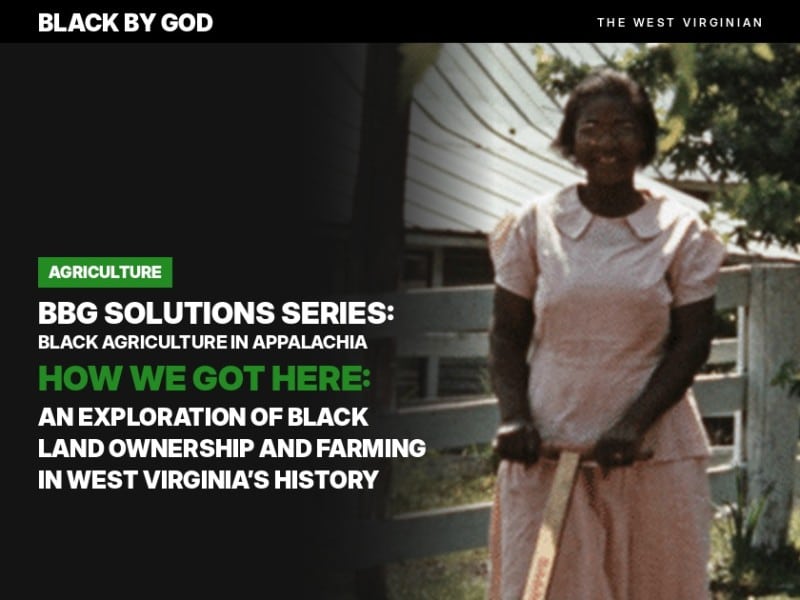
How we got here: An exploration of Black land ownership and farming in West Virginia’s history
Black By God is reporting on how Black farmers in West Virginia are rebuilding agricultural systems despite barriers to land, policy, and capital—highlighting what’s working, who’s leading, and how communities are adapting.